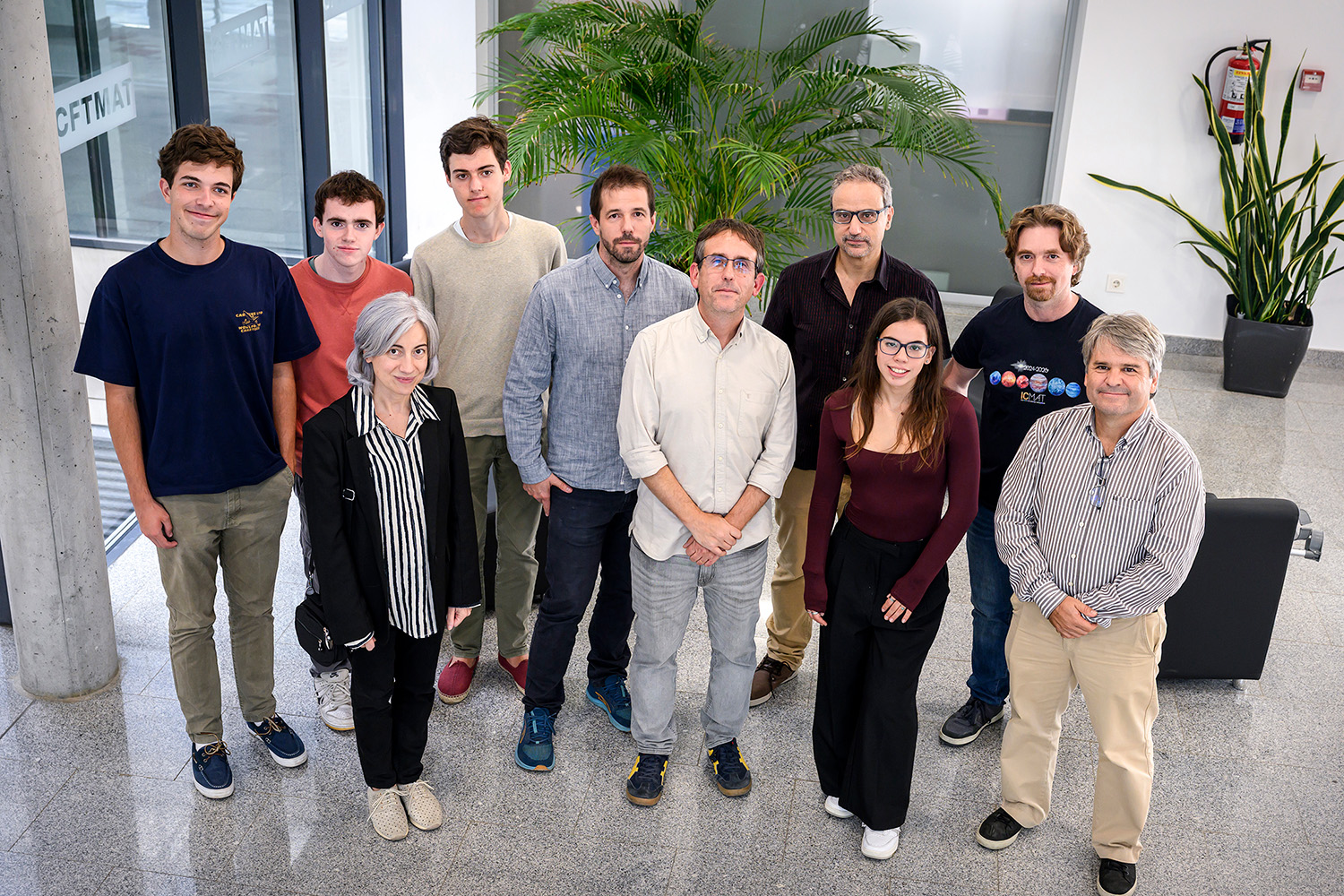
MIP students and mentors, together with the ICMAT direction. Image: ICMAT/Álvaro Minguito
The Institute of Mathematical Sciences (ICMAT) is taking a new step in the training of mathematical talent of excellence. This October it has launched the Mathematics Intensive Programme (MIP), the first intensive training programme for undergraduate mathematics students in Spain. With this initiative, the country aligns itself with a tradition of elite schools well established in other European nations, where institutions such as France’s École Normale Supérieure (ENS) or the Scuola Normale Superiore in Pisa have become the training grounds of some of the world’s most brilliant mathematicians, including several Fields Medal winners. Indeed, the ENS in Paris has trained 11 of the 13 French mathematicians awarded the Fields Medal. France thus ranks second in the world in the number of awardees, behind only the United States.
“MIP was created with the aim of offering a very small group of undergraduate students with extraordinary mathematical talent a high-level complementary education and an especially stimulating environment”, explains Javier Aramayona, Director of ICMAT. “With this, we aim to address an evident need: in Spain we have brilliant young university students, but we lacked a structured programme designed specifically to foster their development, as is the case in other European countries”, he adds.
This initiative complements the range of extracurricular mathematics training projects already in place. “There is already excellent work being done to promote mathematical talent at pre-university levels through programmes such as Estalmat or the Pequeño Instituto de Matemáticas (PIM). Now, with MIP, this effort extends to the university stage”, say María Ángeles García-Ferrero (ICMAT-CSIC) and David Martín de Diego (ICMAT-CSIC), the programme coordinators.
Internationally renowned mentors
In this first year of MIP, four students who have just begun a Mathematics degree in Madrid are taking part, selected from over a hundred applicants. They are Gonzalo San Vicente –a student of the double degree in Mathematics and Physics at the Complutense University of Madrid (UCM)–, Iván López Navarro –studying Mathematics at the Autonomous University of Madrid (UAM)–, Justo Juan Salcedo Otero –enrolled in Mathematics at the UCM and in Physics at the National University of Distance Education (UNED)– and Sofía Paz Chacón –a Mathematics student at the UAM–. “Mathematics has always fascinated me, and this was a perfect opportunity to delve deeper into it during my degree”, says the latter.
Each of them has been assigned an ICMAT researcher as their mentor for the next four years. This year’s mentors are Diego Córdoba, Mario García Fernández, Andrei Jaikin and David Martín de Diego, active researchers in different areas of mathematics. “The mentors nurture each student’s scientific curiosity by meeting with them regularly, suggesting readings and addressing their questions”, explain the coordinators. More mentors will join each year.
“For me, the most important thing is being able to take my first steps into research alongside a guide who is not only a leading figure in their field, but also willing to help, dedicate time to you, and answer even the most basic questions”, says Salcedo.
Throughout the year, the students will prepare a research project to be presented at the end of the course before ICMAT researchers. “The goal is that, throughout their degree, these four students –and those who join MIP in future editions– receive scientific training of the highest international level,” affirm the coordinators.
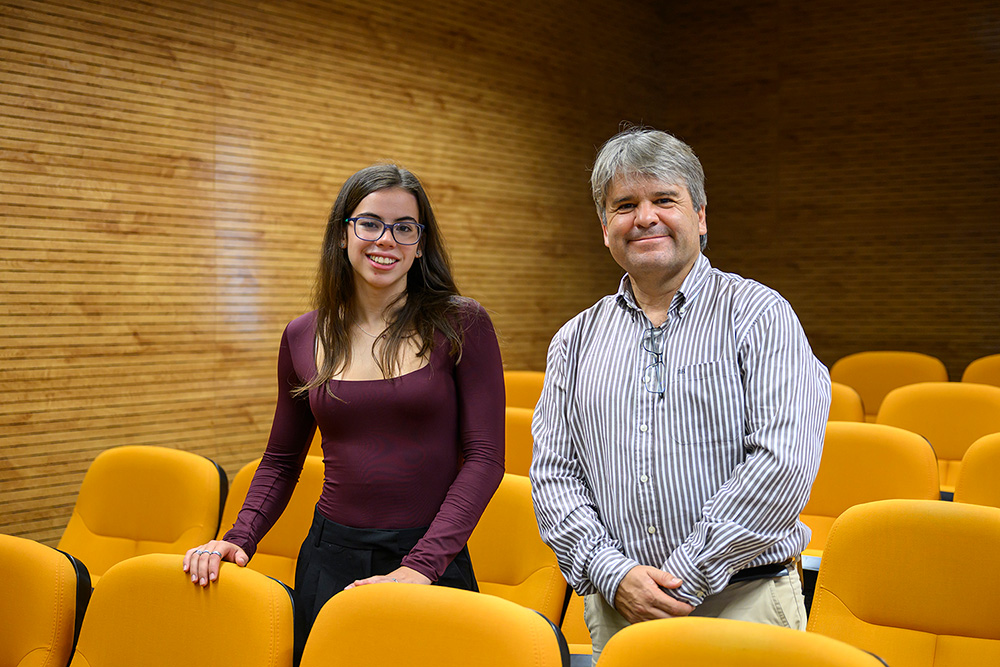
Sofía Paz y Diego Córdoba.
Imagen: ICMAT/Álvaro Minguito
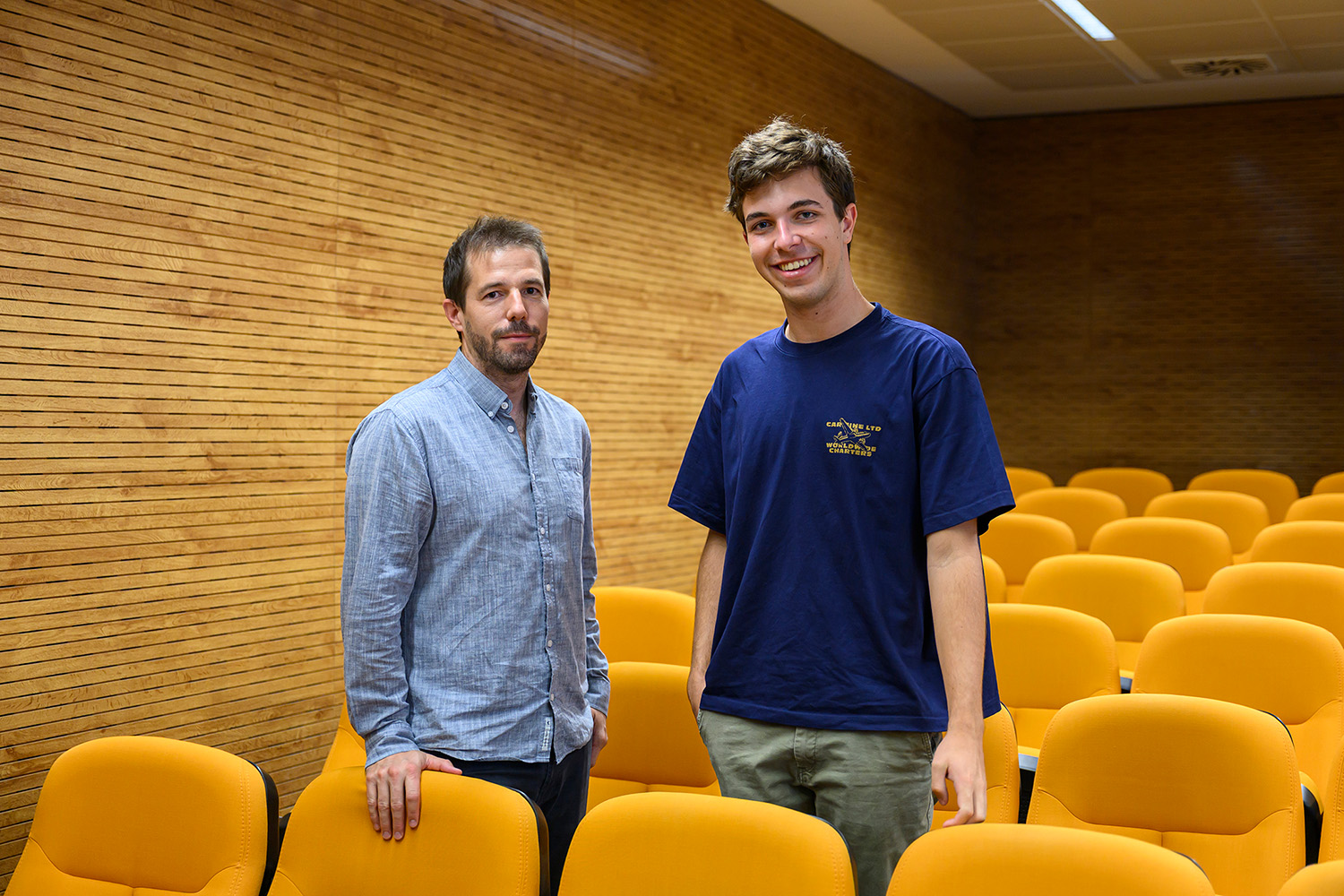
Mario García Fernández y Justo Juan Salcedo.
Imagen: ICMAT/Álvaro Minguito
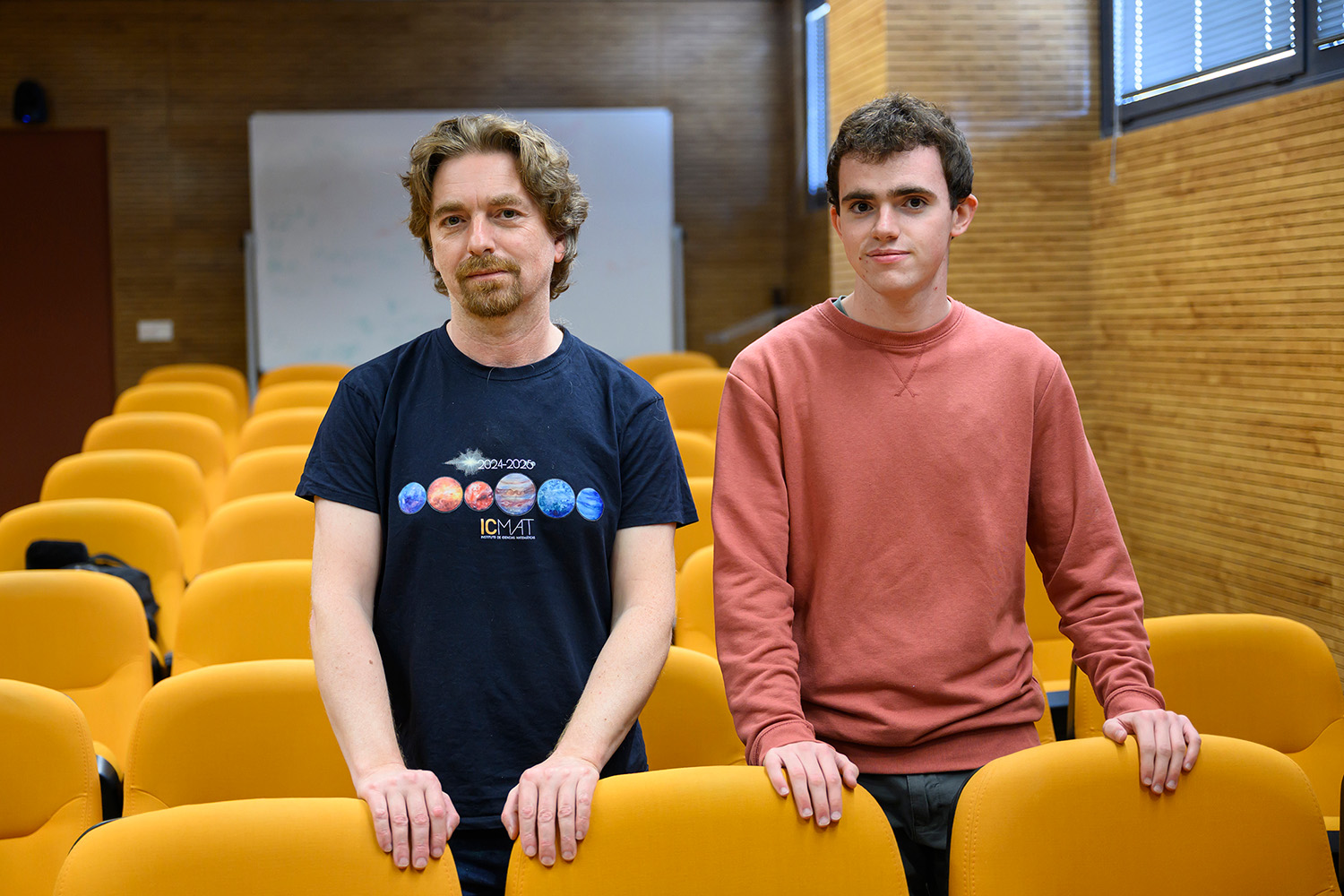
Andrei Jaikin e Iván López.
Imagen: ICMAT/Álvaro Minguito
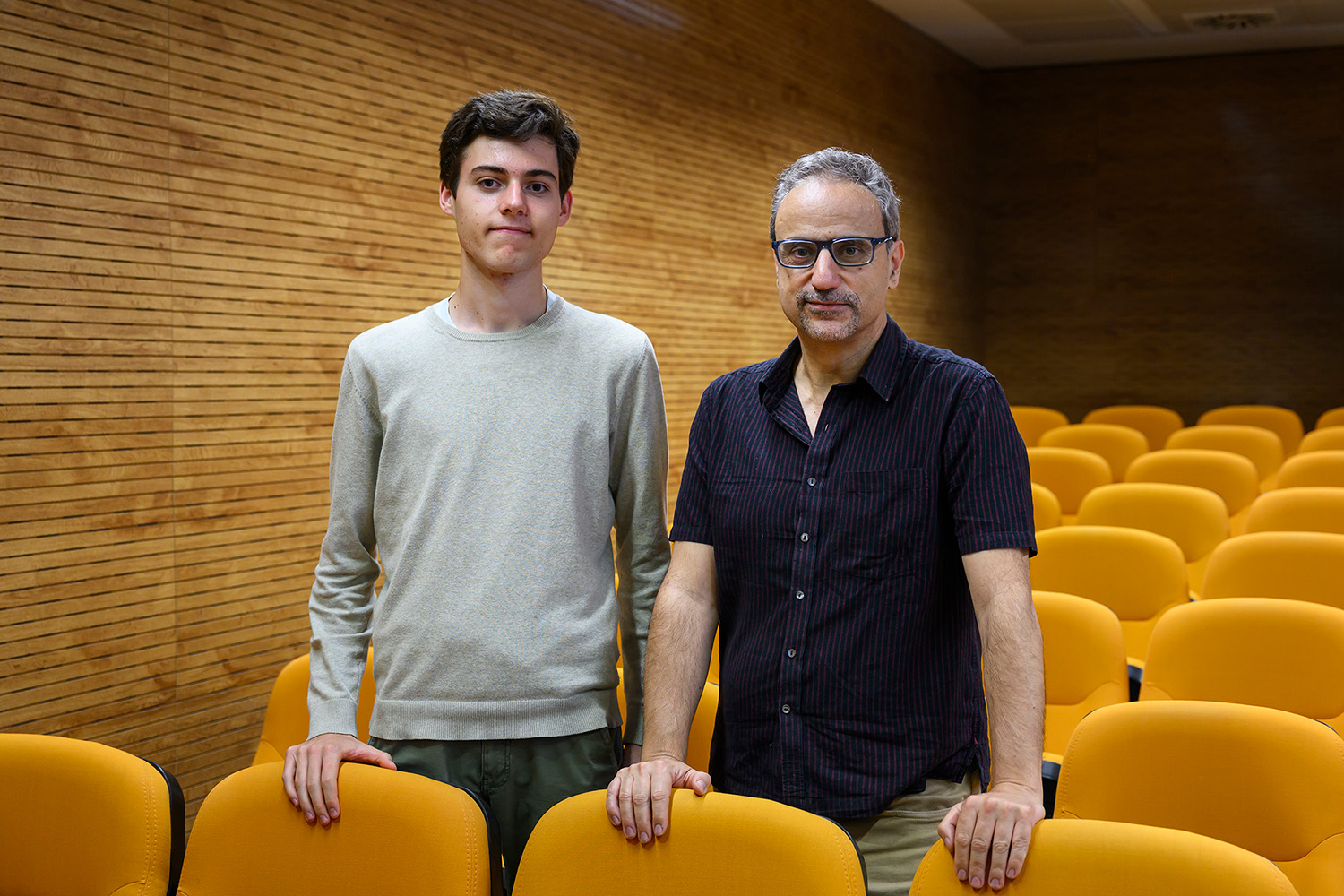
Gonzalo San Vicente y David Martín de Diego. Imagen: ICMAT/Álvaro Minguito
A window into current research
In addition to mentorship, MIP includes advanced minicourses and other activities, which are also open, upon registration, to other undergraduate Mathematics students who are interested. Each thematic minicourse consists of three one-hour sessions held on Friday afternoons at ICMAT’s premises. This term, Antonio Córdoba (ICMAT-UAM), Ana Bravo (ICMAT-UAM), David Ríos (ICMAT-CSIC) and José Luis Fernández Pérez (UAM) are teaching the first series, on current research topics in number theory, algebra, statistics and probability, respectively. “In these courses I hope to learn about new topics and gain a clearer idea of what mathematical research involves”, says San Vicente.
“Our aim is that, by the end of their studies, students will have a general understanding of the current state of mathematics and its main research fields”, the coordinators explain.
As part of the programme, and open to all undergraduate students, lectures will also be organised by leading researchers visiting ICMAT, broadening students’ direct exposure to cutting-edge mathematical research. “In undergraduate studies, the syllabus is more fixed and there is less flexibility or opportunity for in-depth exploration. Throughout MIP, I hope to discover which area I am most passionate about and gain a better understanding of what mathematical research truly entails”, concludes López Navarro.
An investment in Spain’s scientific future
The programme is completely free of charge for students and will run throughout the four years of their undergraduate degree. Upon completion, they will receive a specific certificate issued by the CSIC recognising their participation in this programme of excellence.
“In the medium and long term, our goal is for MIP to help strengthen the mathematical research system in Spain by training a new generation of leaders capable of placing Spanish mathematics at the forefront of the international stage”, says Aramayona. “Ultimately, this programme represents a collective and determined commitment to scientific excellence within the public sphere”, he concludes.
With MIP, ICMAT continues to expand its commitment to excellence in mathematical training, which already includes initiatives such as the aforementioned Pequeño Instituto de Matemáticas (PIM) for young people aged 14 to 18, the JAE School of Mathematics for senior undergraduates, and the Severo Ochoa programme’s scholarships for master’s and doctoral studies. “It is a perfect complement to ICMAT’s training programme”, note the MIP coordinators.
—
Note: This is an automatic translation. Some nuances may differ from the original Spanish version.