On 4 November at 19:00 Alberto Ibort (UC3M-ICMAT) will give the lecture “Is reality as we believe? Mathematics and quantum theory to decipher it” as part of the series Mathematics at the Residencia, at the Residencia de Estudiantes (Madrid). The talk offers a journey through the theories that have redefined what we understand as “reality”, from Isaac Newton’s cosmology and Albert Einstein’s relativity to Roger Penrose’s three worlds and the simulation hypothesis, in light of new quantum technologies. “Mathematics is the only sense that allows us to see clearly in the quantum universe,” says Ibort.

Do we live in a simulation? There is no evidence of it, but some people support this theory about reality, known as the simulation hypothesis. Image generated with AI.
Since the dawn of human thought, trying to understand the nature of reality has been one of the most profound challenges. In this endeavour, which interweaves science and philosophy, mathematics has proved an exceptional tool for describing and understanding existence, even where intuition fails. This is the starting point of the lecture “Is reality as we believe? Mathematics and quantum theory to decipher it”, to be given by Alberto Ibort, Professor at Universidad Carlos III de Madrid and member of ICMAT, on 4 November at 19:00 as part of the series Mathematics at the Residencia, at the Residencia de Estudiantes in Madrid. The event will also be available to watch live via streaming.
“In everyday matters, mathematics allows us to understand reality, to avoid fallacies and not be misled by appearances, which very often simply reflect prejudices or preconceived ideas,” says Ibort. Furthermore, they allow us to overcome failures of intuition or limitations of human perception. “For this reason, they are the basis of the conceptual frameworks we have built throughout history, within which we have anchored the notion of ‘reality’, consistent with the scientific and technological development of the historical moment in which they are formulated,” he adds.
In his lecture, Ibort will discuss some of these frameworks: Newton’s cosmology, Einstein’s relativity, Roger Penrose’s proposed universe – according to which there exist three worlds: the physical, the mental, and the mathematical, mysteriously interconnected – and the simulation hypothesis – which suggests that we could be part of a universe artificially generated by a more advanced civilisation.
“All of these were, at first, controversial and, in some way, counterintuitive. Newtonian space-time was so, and even more so was Einstein’s special relativity, which is still regarded as something mysterious,” Ibort explains. The simulation hypothesis is particularly controversial. “There is no scientific evidence supporting it, but there are interesting – though highly debatable – philosophical arguments pointing in that direction,” he reflects. “Within this framework, the quantum universe would be the result of our description of a ‘higher’ reality from the perspective offered by our simulation,” Ibort explains.
Beyond this uncertain hypothesis, even the most established theories about the quantum world challenge our usual beliefs and perceptions. Phenomena such as superposition or entanglement are so puzzling that they led Richard Feynman, Nobel Prize in Physics in 1965, to say that “nobody understands quantum mechanics”. “Our senses and everyday logic are inadequate to deal with the quantum reality that we have been uncovering for over a century,” Ibort asserts. “Mathematics becomes the only ‘sense’ that works and allows us to see things clearly,” he concludes.
This event is part of the celebrations for the International Year of Quantum Science and Technology 2025. It also forms part of the Mathematics at the Residencia series and of the Science and Technology Week 2025. Admission is free until full capacity is reached.
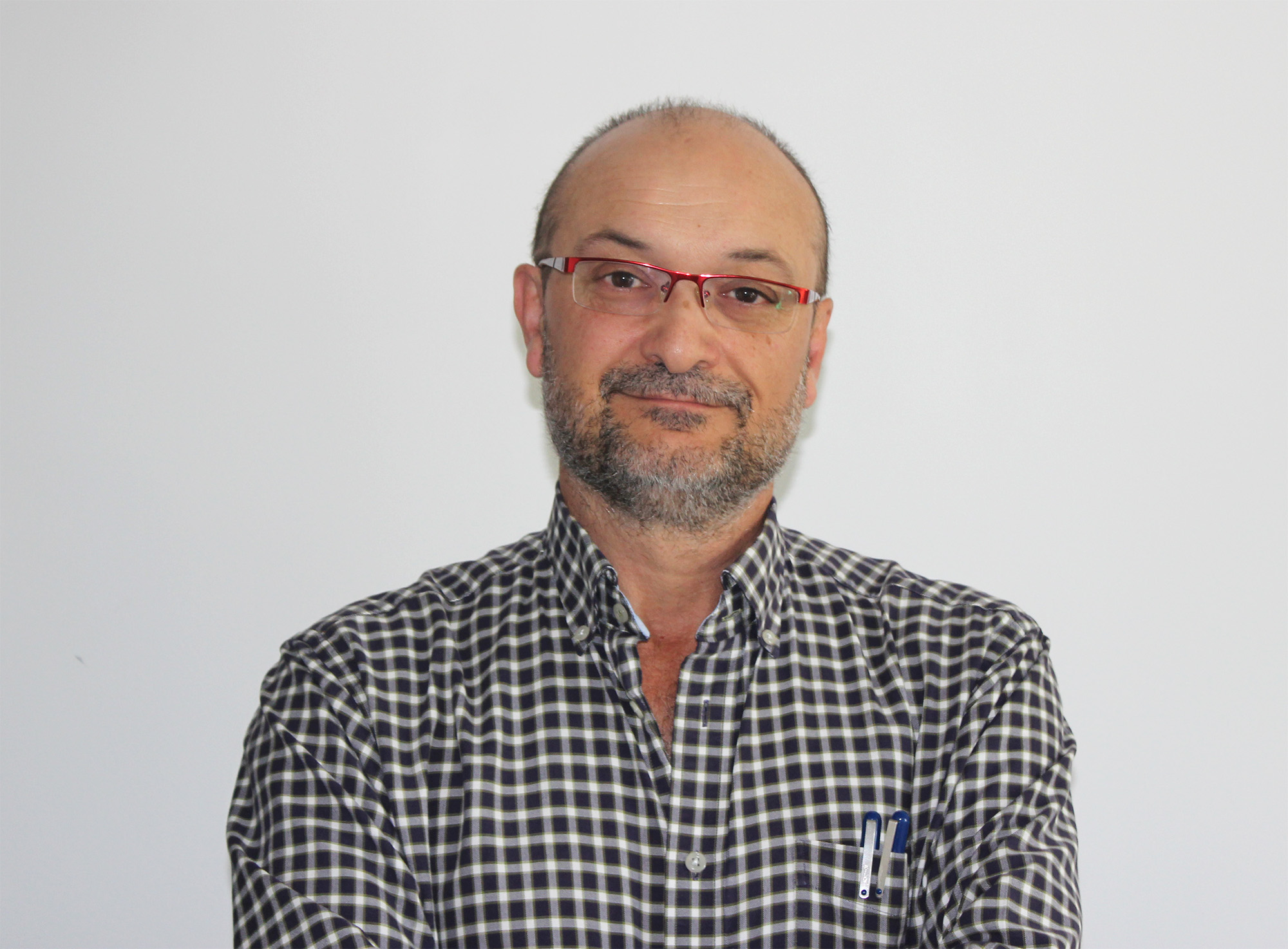
Alberto Ibort is a physicist and mathematician, expert in the mathematical foundations of quantum technologies. Image courtesy of the researcher.
Alberto Ibort
Alberto Ibort is Professor of Applied Mathematics at Universidad Carlos III de Madrid and a researcher at ICMAT. His main contributions have been in the areas of symplectic and contact geometry and, more recently, in the mathematical foundations of quantum technologies, particularly quantum tomography. He is the author of more than 160 scientific publications, has supervised 13 doctoral theses, and has given numerous outreach talks.
More mathematics in Science Week
ICMAT is adding two activities to the international initiative of Science and Technology Week, organised by the Spanish National Research Council (CSIC). In addition to Alberto Ibort’s talk “Is reality as we believe? Mathematics and quantum theory to decipher it” (ICMAT-UC3M), the programme also includes “From the path of a ball to the movement of waves”, a lecture by Ángel Castro (ICMAT-CSIC).
In it, Castro, an international expert in fluid dynamics, will give a very general introduction to the Euler and Navier–Stokes equations, which make it possible to explain phenomena we have all experienced or observed in nature. It will take place on Thursday, 6 November, at 11:00 at the José Saramago Municipal Public Library (Madrid) and is organised in collaboration with the Asociación Cultura Sénior.
Since the creation of the programme in 2009, it has featured renowned international mathematics communicators such as Marcus du Sautoy, Jesús María Sanz-Serna, Pierre Cartier, Guillermo Martínez, Edward Frenkel, Christiane Rousseau, Mickaël Launay, John Allen Paulos, Marta Macho-Stadler, Jin Akiyama, Eduardo Sáenz de Cabezón, Sylvia Nasar, Raúl Ibáñez, and Harald Helfgott.