
From 23 to 27 March, the first of the four workshops organised within the thematic programme Arithmetic of Global Function Fields will take place. Image: Íñigo de Amescua/ICMAT
From 23 to 27 March, Iwasawa Theory over Function Fields takes place, the first of the four workshops in the thematic programme Arithmetic of Global Function Fields, devoted to the study of the arithmetic of elliptic curves defined over global function fields. It features key figures in this research area such as Fabien Trihan (Sophia University, Japan), Ki-Seng Tan (National Taiwan University), Wansu Kim (Korea Advanced Institute of Science and Technology, KAIST) and Andrea Bandini (University of Pisa, Italy).
The thematic programme will run until 12 June at ICMAT and is focused on different topics in arithmetic geometry and algebraic number theory in positive characteristic. This activity is organised within the framework of collaboration with Bruno Anglès (University of Caen Normandy, France) as a distinguished visiting professor, within the Institute’s fourth Severo Ochoa excellence programme.
One of the seven Millennium Prize Problems selected by the Clay Foundation, possibly one of the most difficult to understand for non-specialists, is the Birch and Swinnerton-Dyer Conjecture, concerning objects that are central in arithmetic geometry: elliptic curves defined over the field of rational numbers. A complete resolution of the conjecture still seems beyond the reach of current methods; however, mathematicians have made significant progress on analogous conjectures in the field. In the late 1960s, the mathematician John Tate formulated an analogous conjecture for elliptic curves defined over global function fields — that is, fields of rational functions on algebraic curves defined over finite fields. In 2003, Kazuya Kato (University of Chicago, USA) and Fabien Trihan (Sophia University, Japan) achieved an almost complete proof of it.
Trihan is one of the speakers at the workshop Iwasawa Theory over Funcion Fields, which takes place at ICMAT from 23 to 27 March and brings together around twenty PhD students and postdoctoral researchers with leading international figures in the area. “The study of the arithmetic of elliptic curves defined over function fields is yielding much stronger results than those available for elliptic curves over number fields,” comments Daniel Macías (ICMAT-CSIC), one of the organisers of the meeting together with Bruno Anglès (University of Caen Normandy, France), Oliver Braunling (TU Dortmund University), Dominik Bullach (ICMAT-CSIC) and Maxim Mornev (UCM-ICMAT).
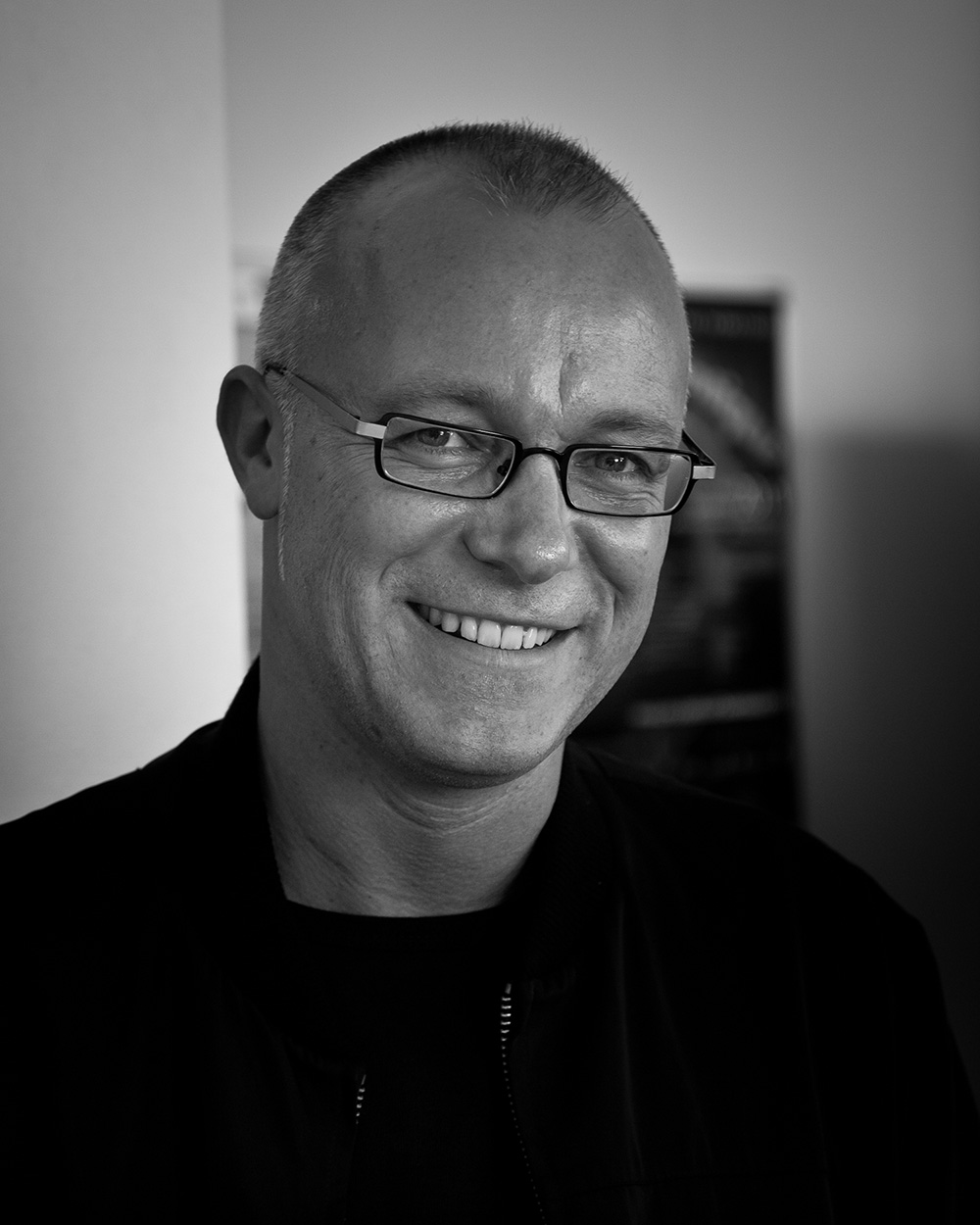
The thematic programme is developed within the framework of the working group led by Bruno Anglès, one of the ICMAT-SO distinguished visiting professors
Trihan himself and Ki-Seng Tan (National Taiwan University), two of the leading figures in this research area, will deliver a minicourse in which they will present both foundational results and recent work on the construction of p-adic L-functions and their relationship with Selmer groups.
In addition, Wansu Kim (Korea Advanced Institute of Science and Technology, KAIST), who has obtained important results in recent years on different topics in arithmetic geometry, is also giving a minicourse. “The results that Kim will present, obtained in collaboration with David Burns and Mahesh Kakde, represent very significant progress towards proving an equivariant refinement of the Kato–Trihan result,” explains Macías.
The workshop programme is completed by a talk given by Andrea Bandini (University of Pisa, Italy) and another by Maxim Mornev (UCM-ICMAT).
This is the first of the four meetings organised within the thematic programme Arithmetic of Global Function Fields, which will run until 12 June, within the framework of the working group led by Bruno Anglès, one of the distinguished visiting professors of the Distinguished Visiting Laboratories and Professors (PVD) programme of the Institute’s fourth Severo Ochoa excellence programme (2024–2028). The PVD programme is coordinated locally by Macías.
—
This text is an automatic translation from the original Spanish version.