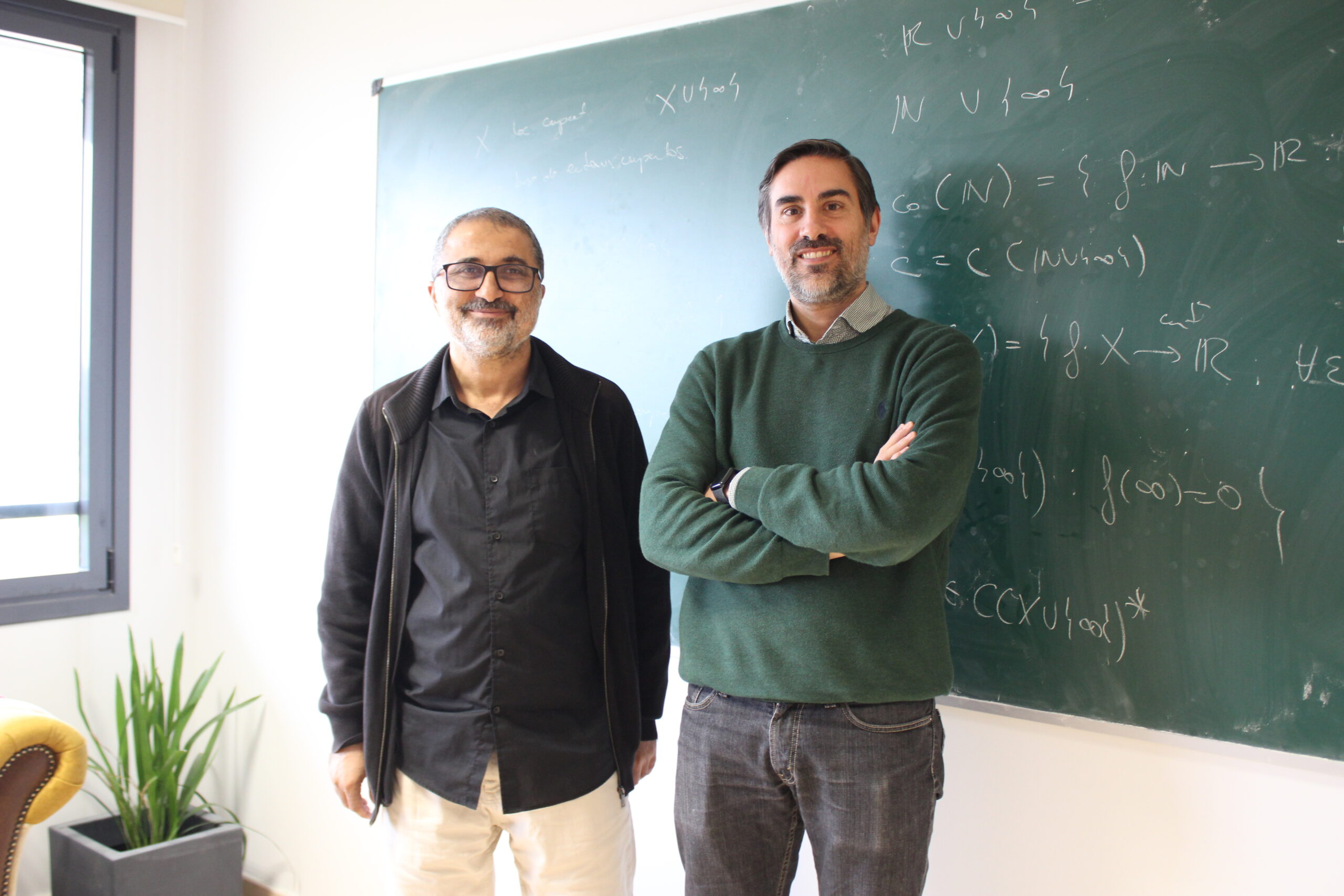
Youssef Azouzi, researcher and professor at the University of Carthage (Tunisia), is an expert in vector lattices and Banach lattices. On the latter topic he has been collaborating, since 2020, with Pedro Tradacete (ICMAT–CSIC). As a result of this collaboration, last year Azouzi spent a research stay at ICMAT, founded by the International Centre for Pure and Applied Mathematics (CIMPA), during which he taught the course “Nets in vector lattices and functional analysis”. We spoke with him during his visit to the institute.
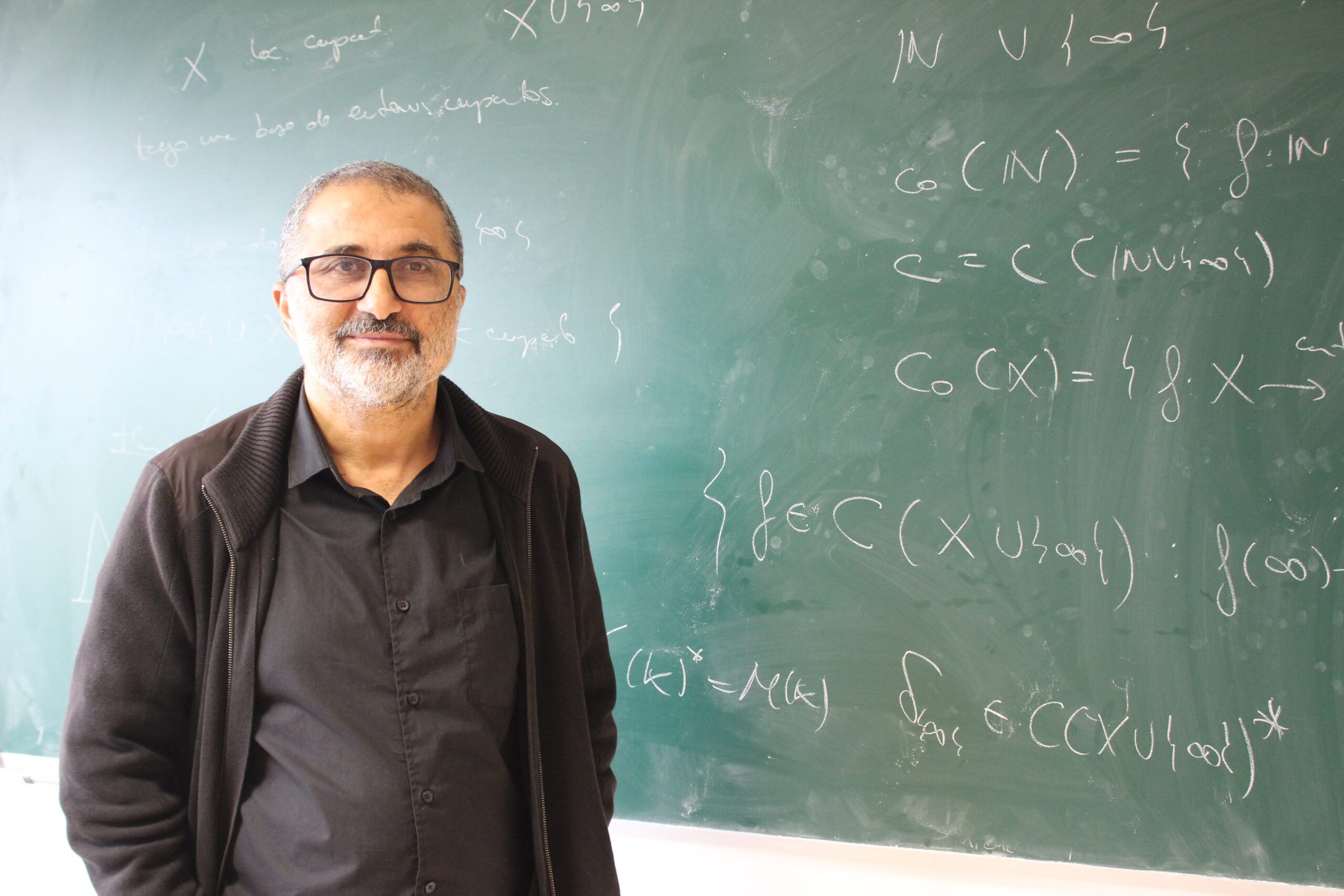
Youssef Azouzi also helps prepare students for math competitions, with the aim of supporting talented young mathematicians. Image: ICMAT.
Mathematics is often described as a universal language, but it is also shaped by cultural and educational context. Do you think this context influences the way mathematics is practised?
Of course there are some differences, but for people working in the same field it is very easy to communicate. We follow the same rules, the same laws. It is very easy to collaborate with people who come from other countries and have a culture very different from your own.
How did your collaboration with Pedro Tradacete and ICMAT begin?
Just before the COVID pandemic we organised a small seminar in Tunisia and decided to invite people from other countries, including Pedro, whom I knew from some of his work. Travelling was difficult, so we suggested that the invited speakers give their talks online. However, Pedro proposed coming in person, which pleasantly surprised us. After that, I was able to travel to Madrid several times, thanks to a two-year iCOOP project run by the CSIC that allowed us to travel extensively between Tunisia and Spain, which led to us collaborating more and more. In the summer of 2024 we organised a CIMPA School [funded by the International Centre for Pure and Applied Mathematics], in which many young people from different countries—mainly from North Africa—took part for two weeks. Many of them were from Tunisia, others from Morocco. In 2022, we began jointly supervising a PhD thesis by a young student from Tunisia.
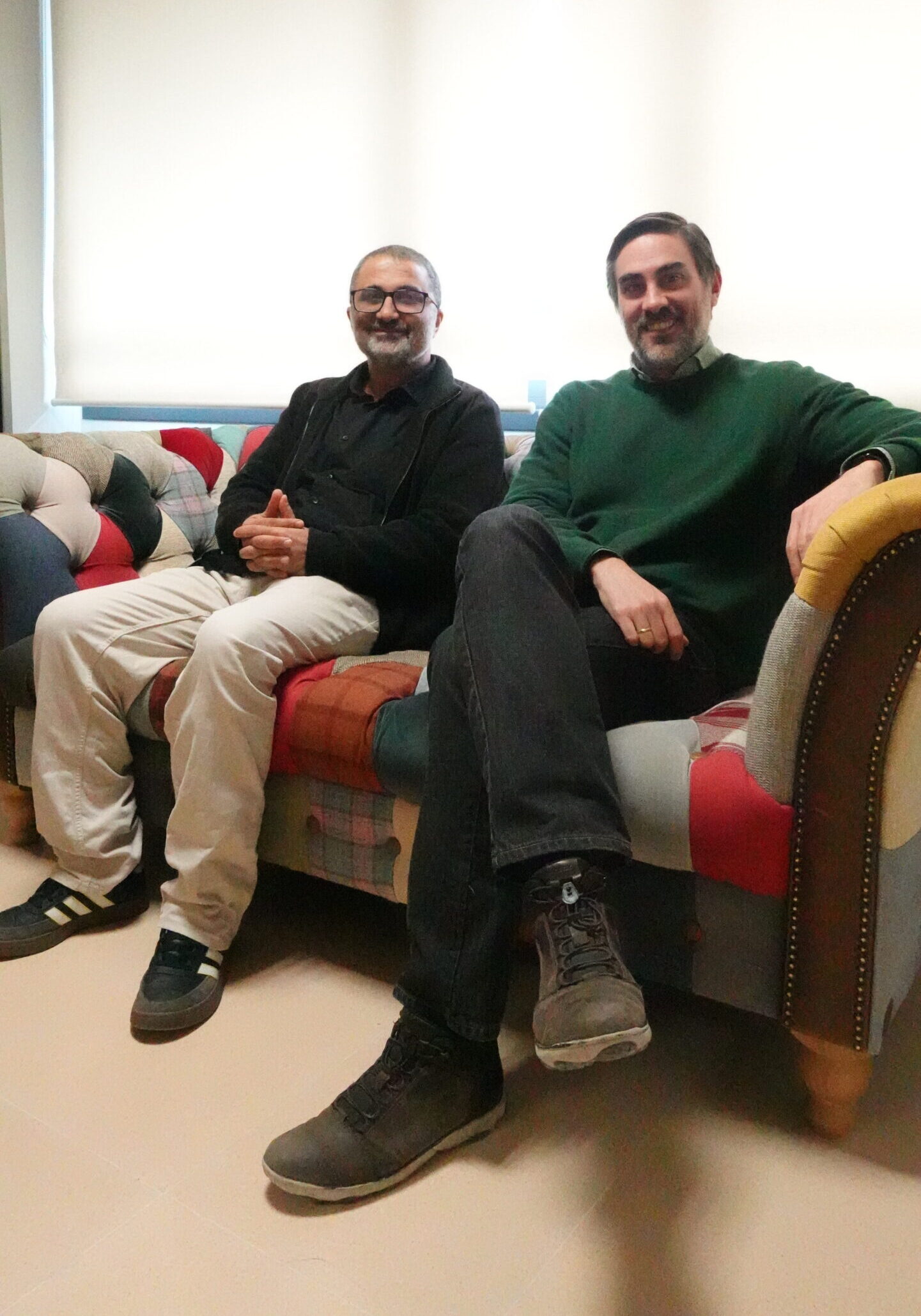
Azouzi and Tradacete began collaborating shortly before the COVID pandemic. Image: ICMAT.
What impact do you think collaboration with ICMAT may have on your career?
I think it could lead to important results, but we need some time to see that. It may come a little late for me. My wish is that young students can benefit from this collaboration. One of my new PhD students has just spent two weeks at ICMAT and is very motivated. I also hope that another of my students will be able to do a research stay at the institute. Having a real experience is very different from just hearing about it. Ideally, they should stay for a long period, which would allow them to interact with other people and have conversations with senior researchers. They gain much less from the experience if they only attend a conference, as it can be difficult for them to follow the talks.
Here at ICMAT we were also able to attend a PhD defence; it was the first time I had attended one outside Tunisia, and both my student and I were impressed. Now we want his defence to be similar or even better.
What kind of objects do you study, and what questions do you ask about them?
My research initially focused on vector lattices, which are vector spaces equipped with an order structure. Later I began working in functional analysis and on topological topics. I study the connections between these structures and the operators that act on these spaces. In collaboration with Pedro, I work on Banach spaces and Banach lattices.
What were your first steps in research like?
My research was very much guided by teaching; I was a lecturer for many years before starting to do research. One of my colleagues suggested that I work with him, and he eventually became my PhD supervisor.
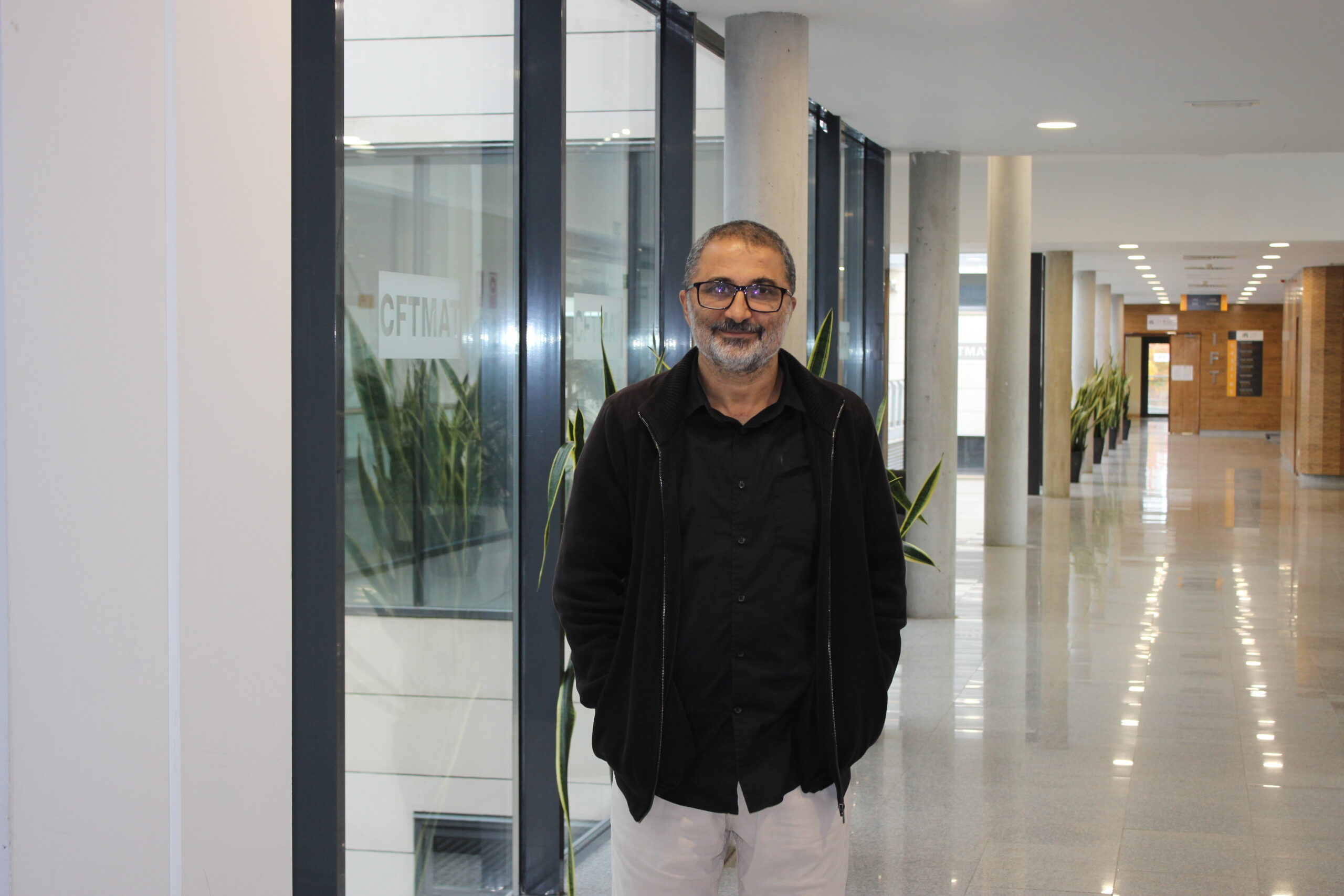
Azouzi visited ICMAT with one of his doctoral students last year. Image: ICMAT.
What was the situation of mathematics in Tunisia at that time?
In the 1960s, Tunisian mathematicians were trained in France and had a considerable impact on the country. Among them was Mohammed Salah Baouendi [father of Moungi Bawendi, winner of the Nobel Prize in Chemistry], who spent several years in Tunisia before finishing his career in the United States. At that time, good students wanted to study mathematics, but this is no longer the case; it is not an attractive career for young people. There are students with great potential and very strong minds, but they prefer to go into engineering, medicine, or perhaps something related to finance.
What do you think this is due to?
In Tunisia, school is not sufficient if you dream of an exceptional career in mathematics. The system encourages passive learning and gives greater importance to marks. It does not sufficiently encourage creativity and autonomy. People who want to pursue a career in mathematics have to do something outside school. Competitions such as the Mathematical Olympiad allow you to think freely. I collaborate as a trainer for young people preparing for Olympiads; I enjoy discovering young talents and helping them. I believe that some students are born to do mathematics. That is why we have to identify them, educate them and guide them. This type of training is very important in Tunisia; we lack mathematics students.
Sixty per cent of university students in Tunisia are women. Is this figure also reflected in mathematics?
No, although the number of women in mathematical research is certainly growing. They are more committed to work and learning than men.
Cooperation programs at ICMAT
Pedro Tradacete is a CSIC Researcher at the Instituto de Ciencias Matemáticas (ICMAT). His main research interests lie in functional analysis and operator theory, with a particular focus on the geometry of Banach spaces, Banach lattices, positive operators, and interpolation and extrapolation theory. Tradacete is involved in cooperation projects in mathematics with developing countries through organizations such as CIMPA and with the support of programs such as iCOOP from the CSIC.
“I believe it is very important to maintain a welcoming attitude towards the Tunisian mathematical community,” he explains. “There is much that can be achieved, and cooperation is the key. In Spain, we do not have a very long tradition in mathematics, at least compared with other parts of Europe, but we are now in a position comparable to that of our neighbours. This is largely due to the fact that, in the 1970s and 1980s, many Spanish mathematicians went abroad to pursue their PhDs, trained with international researchers, and then returned. We benefited greatly from the support of other communities, and it is important that we remember this.”