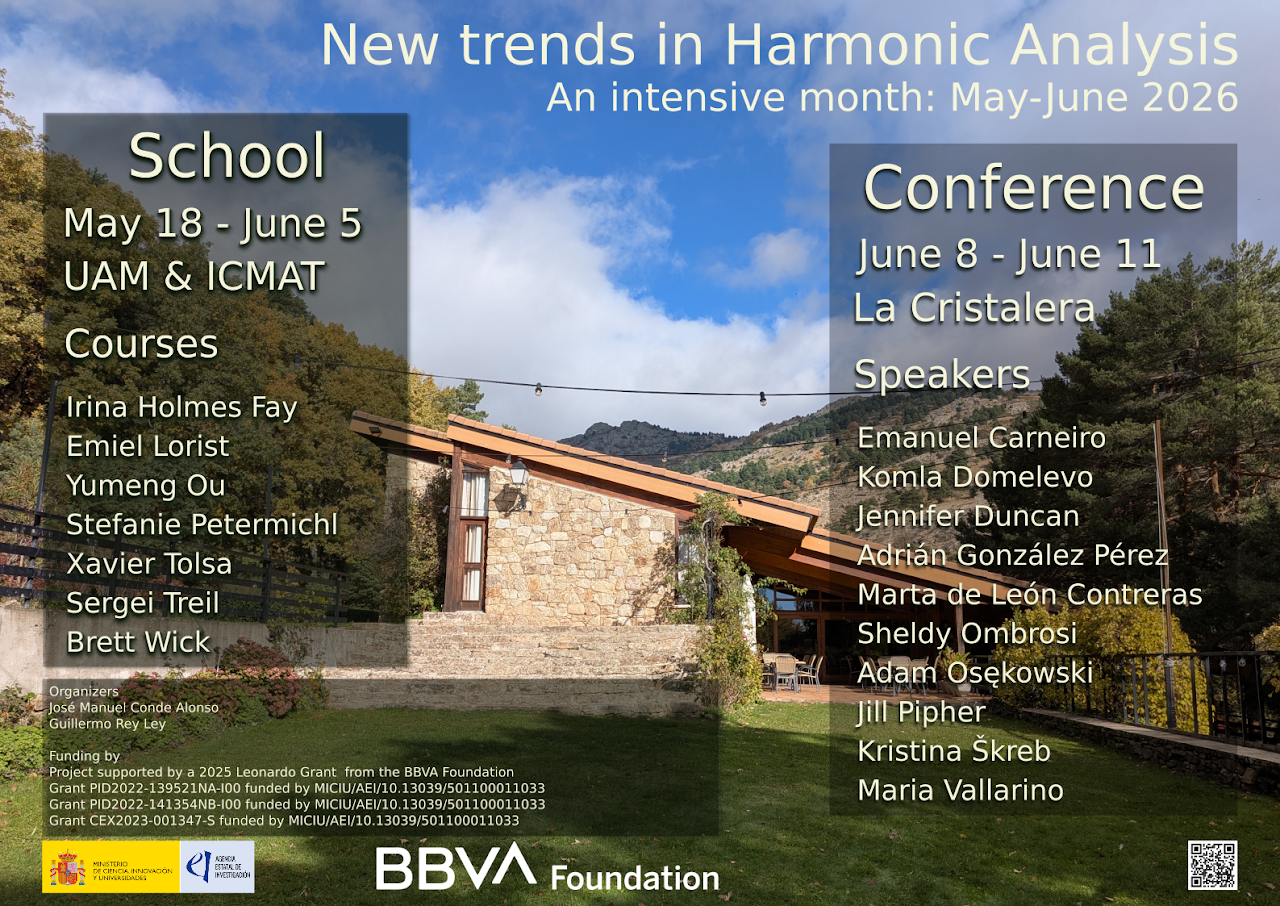
The programme ‘New Trends in Harmonic Analysis’ will bring together more than one hundred researchers from around the world between 18 May and 11 June 2026, including some of the most renowned mathematicians in the field. The event combines a three-week school on the UAM campus with a closing conference at La Cristalera, in the mountains of the Madrid region.
Ocean waves, the signal of an electrocardiogram, the compression of a digital image, or the behaviour of a turbulent fluid all have something in common: they can be described and analysed using the tools of harmonic analysis, a branch of mathematics that originated more than two hundred years ago with the work of the French mathematician Joseph Fourier and which is now undergoing rapid expansion.
From 18 May to 11 June 2026, the Institute of Mathematical Sciences (ICMAT) is organising the programme ‘New Trends in Harmonic Analysis’, a thematic month that will bring together leading international researchers to discuss open problems and the most innovative techniques in the discipline. The programme, structured as a three-week intensive school followed by a scientific conference, is co-organised by José Manuel Conde Alonso (ICMAT–Autonomous University of Madrid (UAM)) and Guillermo Rey (ICMAT–UAM).
In its most elementary form, harmonic analysis studies how to decompose complex functions or signals into simpler components in order to understand and manipulate them more effectively. “Harmonic analysis emerged from the study of the Fourier transform, an important tool not only in mathematics but also in other sciences and engineering. The set of techniques developed over the last century can now be considered mature, and I believe one of the reasons the field remains so interesting is its applicability,” says José Manuel Conde Alonso, member of ICMAT and associate professor at UAM.
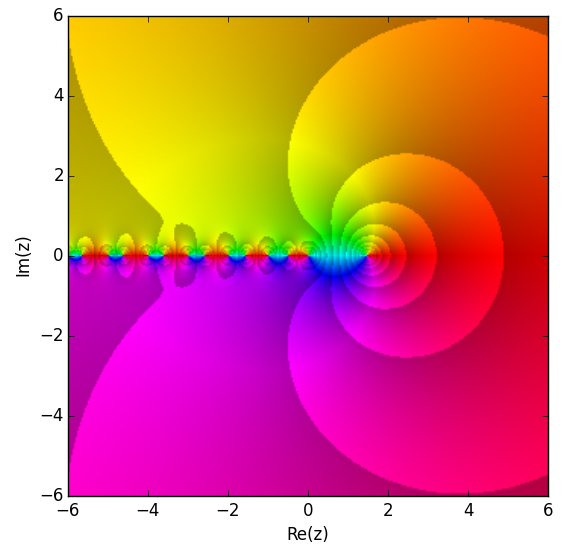
The digamma function on the complex numbers, a function that appears in harmonic analysis. Image: Empetrisor.
The Fourier transform translates any signal into the language of frequencies. But the field has evolved far beyond that original idea: today harmonic analysis provides fundamental techniques for the study of the equations governing fluids, for understanding the geometry of fractal sets, for operator algebras, and for probability theory.
“Among the most active topics in the field at the moment are problems concerning the restriction of the Fourier transform and Fourier multipliers, applications in operator algebras through probabilistic techniques, and the geometry of complicated subsets of Euclidean space. One of the most striking recent advances has been the significant progress on the famous Kakeya problem, which asks how much ‘space’ a needle needs in order to rotate 360 degrees and which has deep implications for other areas of mathematics,” says Conde.
Three weeks of school and a conference
The programme is organised in two phases. During the first three weeks — from 18 May to 6 June — the school will take place at the Department of Mathematics of UAM and at ICMAT itself. “The format combines advanced mini-courses in the mornings with discussion sessions and presentations by young participants in the afternoons. The school is especially aimed at doctoral students and researchers in the early stages of their careers,” explain the organisers.
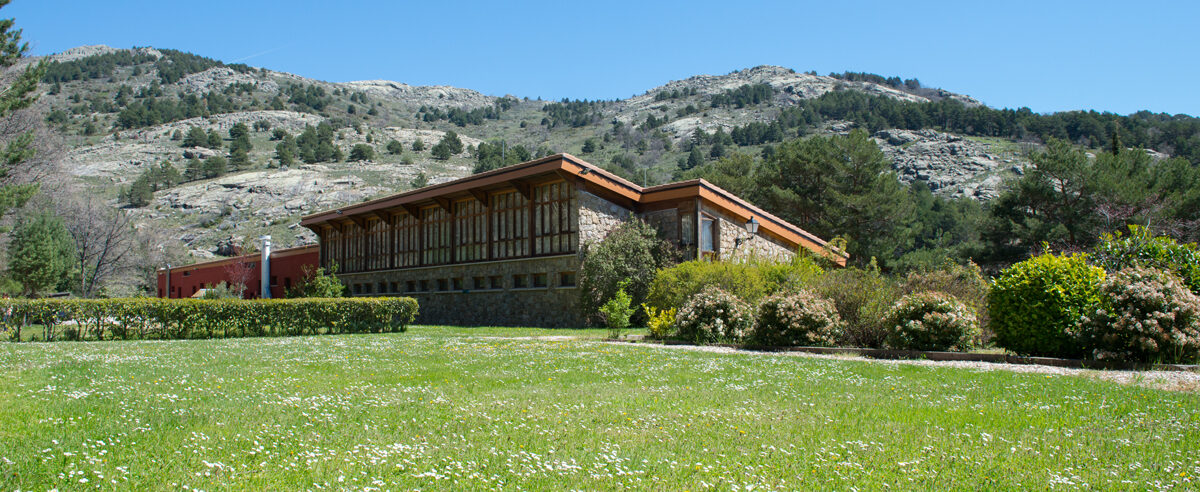
La Cristalera is a UAM educational centre that hosts meetings, conferences, summer courses, and leisure and cultural activities. Image: Sergio Reyes.
The event concludes with a four-day scientific conference — from 8 to 11 June — at La Cristalera, the UAM conference centre located in Miraflores de la Sierra, in the mountains north of Madrid. All conference participants will stay on site, encouraging the kind of informal scientific interaction that often gives rise to new collaborations. “As a model for this programme, we used one that took place at IMUS at the University of Seville in 2011. Both Guillermo and I attended that programme when we were beginning our predoctoral training, and it led to our first joint paper, which ultimately became very important in our careers,” explains Conde.
Leading international figures
The programme brings together some of the most influential harmonic analysts on the international scene, along with a strong representation of younger researchers. Among the speakers at the school and conference are:
Jill Pipher. Professor at Brown University (United States) and one of the most influential mathematicians of recent decades. She served as president of both the American Mathematical Society (AMS) and the Association for Women in Mathematics (AWM), and as Brown’s vice-president for research. Her research in harmonic analysis and partial differential equations also has a significant applied dimension: Pipher is co-inventor of one of the public-key cryptographic systems resistant to quantum computers, whose development has become increasingly important as quantum computing advances. Pipher is also a member of the External Scientific Advisory Committee of ICMAT.
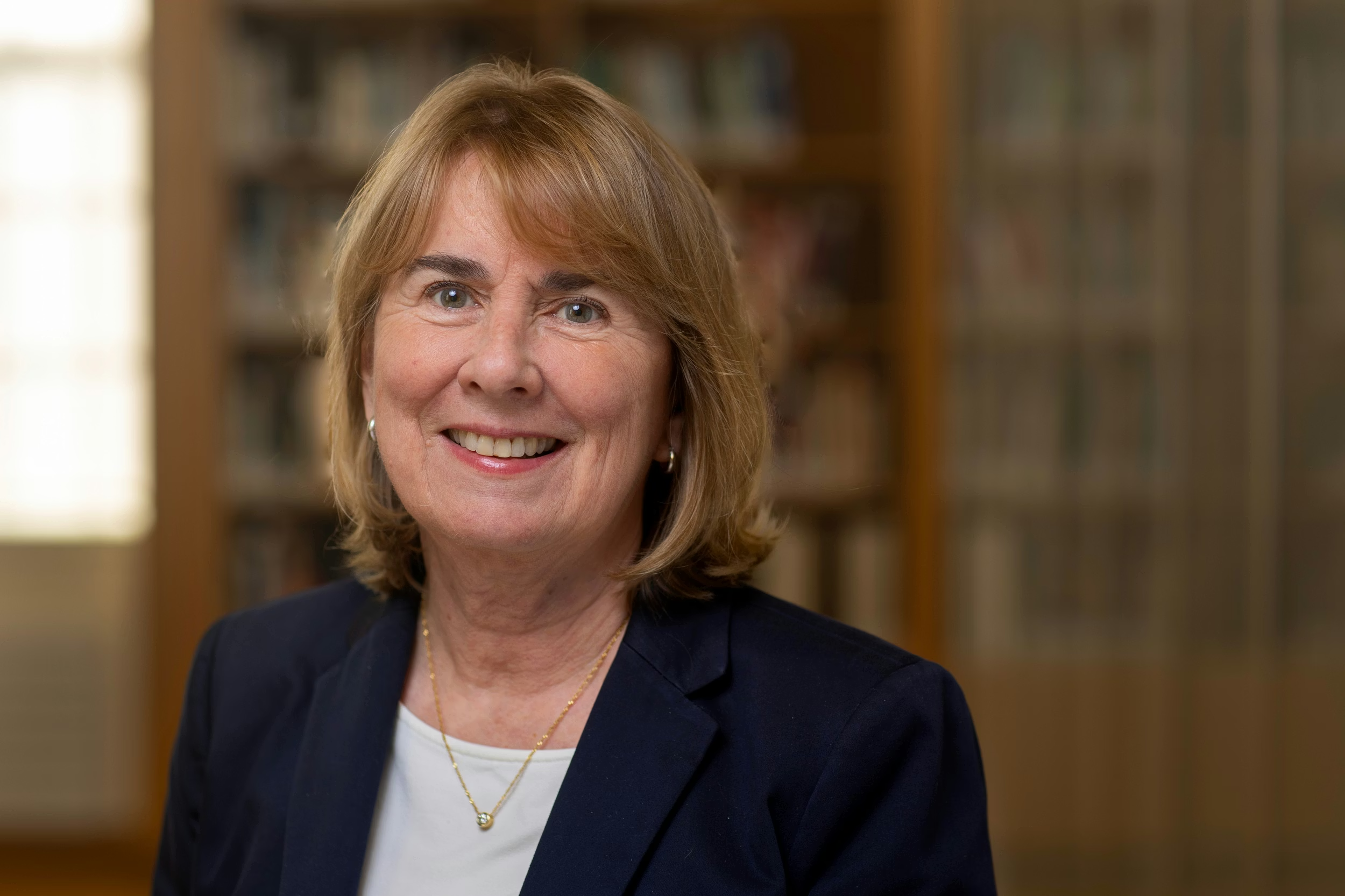
Mathematician Jill Pipher will be at ICMAT during the first week of June as part of the thematic month. Image: Simons Foundation.
Stefanie Petermichl. Professor at the University of Toulouse (France) and holder of the Alexander von Humboldt Chair at the University of Würzburg (Germany). Petermichl is the recipient of the Salem Prize — the most prestigious award in harmonic analysis — and has been an invited speaker at the International Congress of Mathematicians (ICM). She has also received an ERC Consolidator Grant from the European Research Council. Her work on Calderón–Zygmund operators and weighted estimates is considered central to the field.
Xavier Tolsa. An ICREA researcher and professor at the Autonomous University of Barcelona, Tolsa is one of the most internationally recognised Spanish mathematicians. He is also a recipient of the Salem Prize and has been awarded two ERC Advanced Grants from the European Research Council, in addition to Spain’s Julio Rey Pastor National Research Prize in mathematics and information and communication technologies. Tolsa has been selected as a plenary speaker for ICM 2026 in Philadelphia, a major international distinction. At the school he will teach a course on non-homogeneous Calderón–Zygmund theory, developments of which have proved crucial in resolving fundamental questions in geometric measure theory and in the study of partial differential equations on domains with irregular boundaries.
Among the other distinguished mathematicians participating in the thematic month is Sergei Treil, professor at Brown University and Salem Prize winner, an expert in harmonic analysis and operator theory.
A commitment to the next generation
One of the central aims of the programme is its focus on mathematicians at the earliest stages of their careers. Most of the participating doctoral students and young researchers will have the opportunity to present their work in seminars before their peers and receive feedback from the programme’s senior researchers. “We hope that the courses, and above all the interactions around them — coffees, lunches, dinners… — will allow young participants to collaborate with some of the leading specialists in the field, who may become their mentors or collaborators in the near future,” says Conde.
The UAM campus in Madrid has historically been one of Europe’s leading centres for harmonic analysis, and this programme is conceived as a way of passing that tradition on to future generations while connecting it with the most current lines of research worldwide.
Note: this is an automatic translation.
“`