- Problems with millions of parameters remain costly to solve even with high computational capacity
- Quantum algorithms open the door to drastically reducing these times
- The HHL algorithm, designed by Aram Harrow (MIT), was one of the first to demonstrate a possible exponential advantage
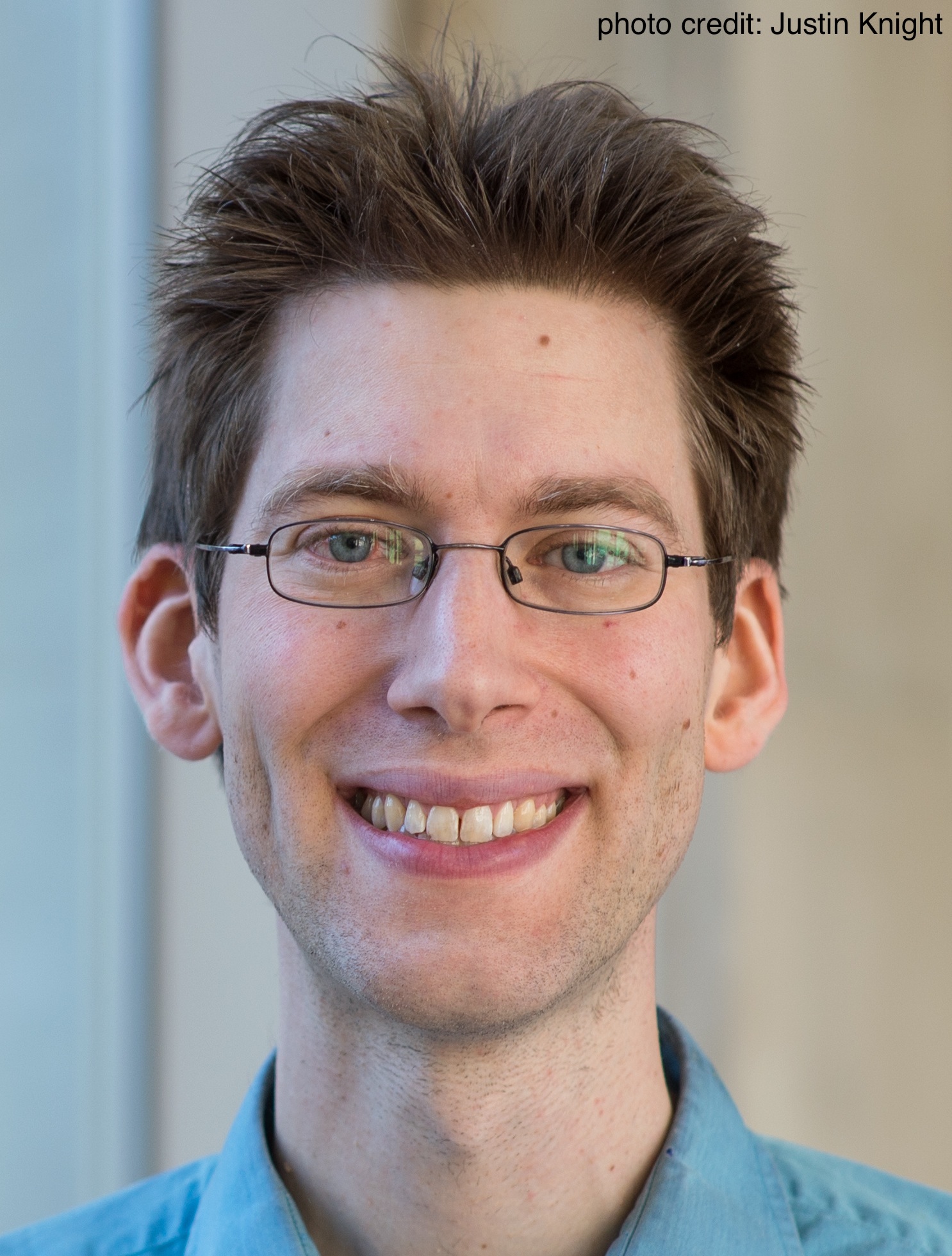
Aram Harrow. Credit: Justin Knight.
Countless problems in science, engineering, and technology require solving systems of linear equations. From the simulation of materials and molecules to risk analysis, making predictions using machine learning models, or studying fluids and structures. In all these cases, the problem translates into solving enormous equations (with millions or billions of variables). Their size is such that the time required to solve them, even using massive supercomputers, is high and may require days of processing. However, quantum computers promise to drastically change the situation and reduce the required resources exponentially, to minutes or even seconds. To achieve this, quantum algorithms are needed, as they allow the exploitation of quantum advantage.
One of the most famous is the HHL algorithm. Specifically designed to solve systems of equations, it has shown promising results. One of its three creators, the young professor at the Massachusetts Institute of Technology (MIT), Aram Harrow, is teaching a course these weeks for PhD students at the Institute of Mathematical Sciences (ICMAT). “He is one of the leading international researchers in quantum computing and quantum algorithms,” says David Pérez García (ICMAT-UCM), who is organizing the activity within the ICMAT ‘Ignacio Cirac’ Laboratory, which he coordinates. “HHL is one of the most famous quantum algorithms; it is used as a fundamental subroutine in many other quantum algorithms,” he adds.
This algorithm was one of the first to show a possible exponential advantage over classical methods. This demonstrated that quantum computers could solve fundamental mathematical problems far more efficiently. However, achieving this advantage in practice still presents significant limitations, as it requires many qubits and low-noise environments, which are not yet available, making research in this field very active.
Aram Harrow
Aram Harrow (1980, Michigan, USA) is a theoretical physicist and computer scientist specializing in quantum information and quantum algorithms. He is currently a professor at the Massachusetts Institute of Technology (MIT), where he has developed much of his education and career. He earned his degree in Mathematics and Physics in 2001 and completed his PhD in physics in 2005 under the supervision of Isaac Chuang. During his time as a student, he worked at the MIT Media Lab and began researching fundamental topics in quantum information theory.
After completing his PhD, he held academic positions at the University of Bristol (UK) and the University of Washington (USA), before returning to MIT in 2013. His research focuses on understanding what quantum computers can actually do, connecting physics, mathematics, and computer science.
Harrow is best known for developing, together with Avinatan Hassidim and Seth Lloyd, the HHL algorithm in 2008. In addition, he has made significant contributions to quantum information theory, quantum communication, and many-body physics, as well as to the design of other quantum algorithms and the field of computational complexity.
Throughout his career, he has received multiple awards, such as the Rolf Landauer and Charles H. Bennett Award in quantum computing, and the Simons Investigator (2023).
ICMAT: a global hub for quantum computing
Harrow is teaching the course “Quantum Computing and Quantum Information”, from April 8 to 16, 2026 at ICMAT, for PhD students. The activity is organized by David Pérez García (ICMAT-UCM), who coordinates one of the Severo Ochoa Laboratories, led by Ignacio Cirac and dedicated to quantum computing.
Harrow, who is spending a year at ICMAT, will also be one of the lecturers at the ICMAT JAE School of Mathematics 2026. The school, which is free to attend, is aimed at undergraduate and master’s students interested in learning about research in mathematics and its applications. This year it will take place from June 22 to July 3, 2026, and promotes interaction between students and high-level international researchers.
Note: This is an automatic translation and may contain inaccuracies.