Throughout the 2024/25 academic year, the Small Institute of Mathematics (PIM) has brought together 150 young people aged 12 to 18 at the ICMAT every week. Their main activity: collaboratively tackling mathematical challenges and, in the process, meeting others passionate about the discipline. Last Friday, a closing event was held to mark the end of this third edition of the PIM. The highlight of the day was a talk by Eduardo Sáez de Cabezón, science communicator and creator of the YouTube channel Derivando, and the presence of Eloísa del Pino, president of the CSIC. This week, around 30 second-year high school students who are saying goodbye to the PIM face the University Entrance Exam. Many of them are already thinking about the score they need to access their desired degree. Those planning to enroll in a Mathematics degree—approximately half of them—may face difficulties, as, if the trend from previous years continues, these degrees will remain among the most in demand. The PIM organizing team expresses concern about the potential loss of scientific vocations this could entail.
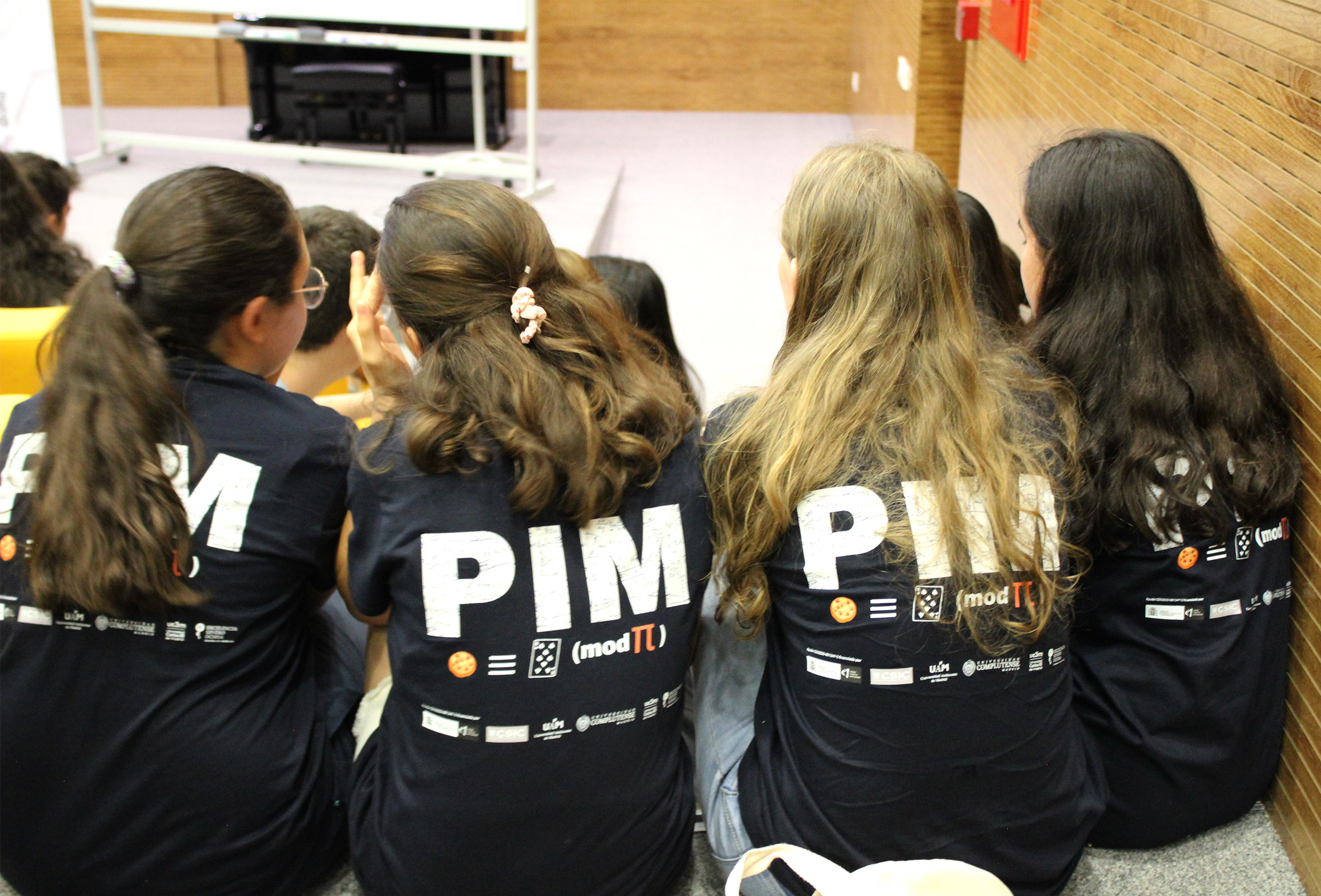
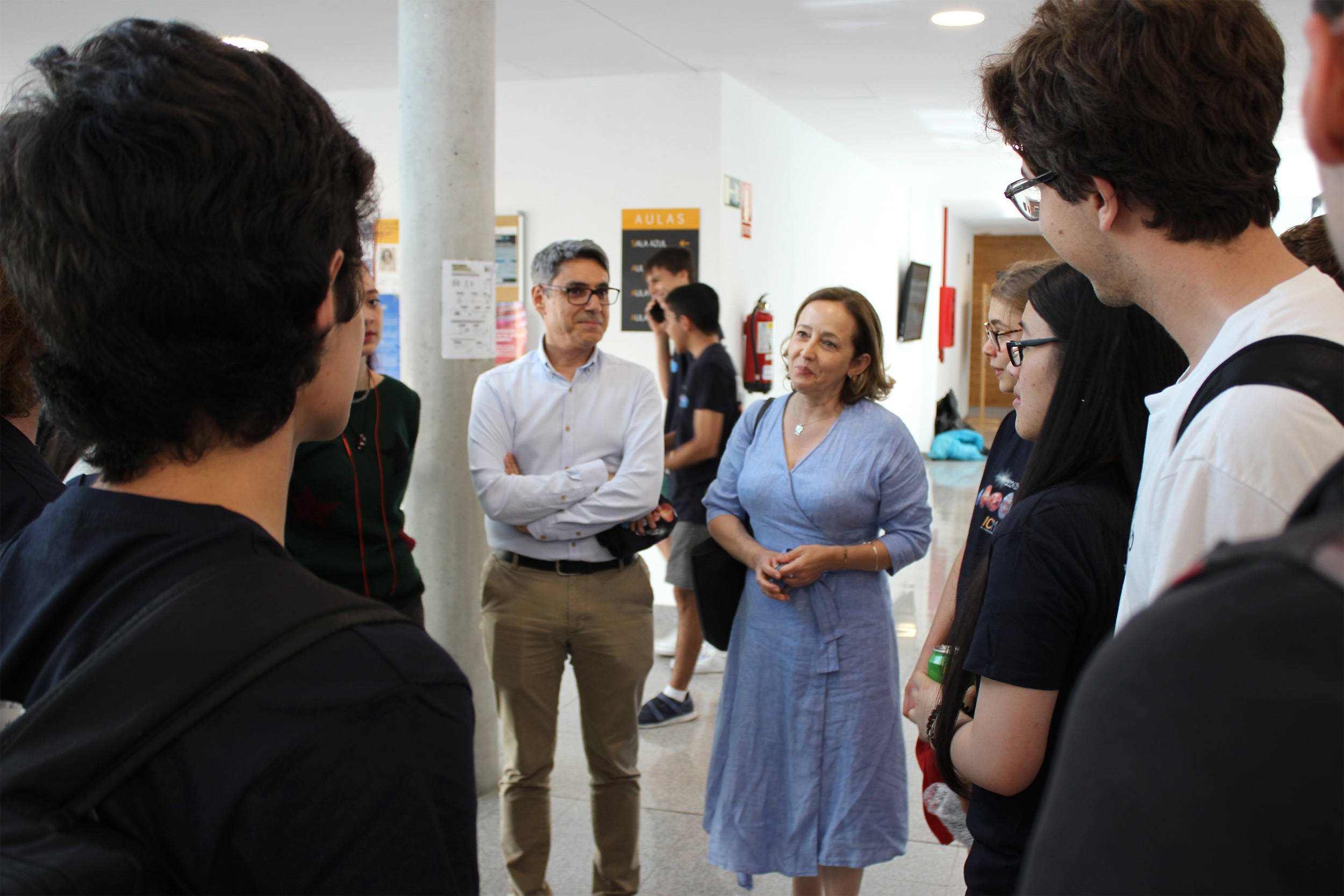
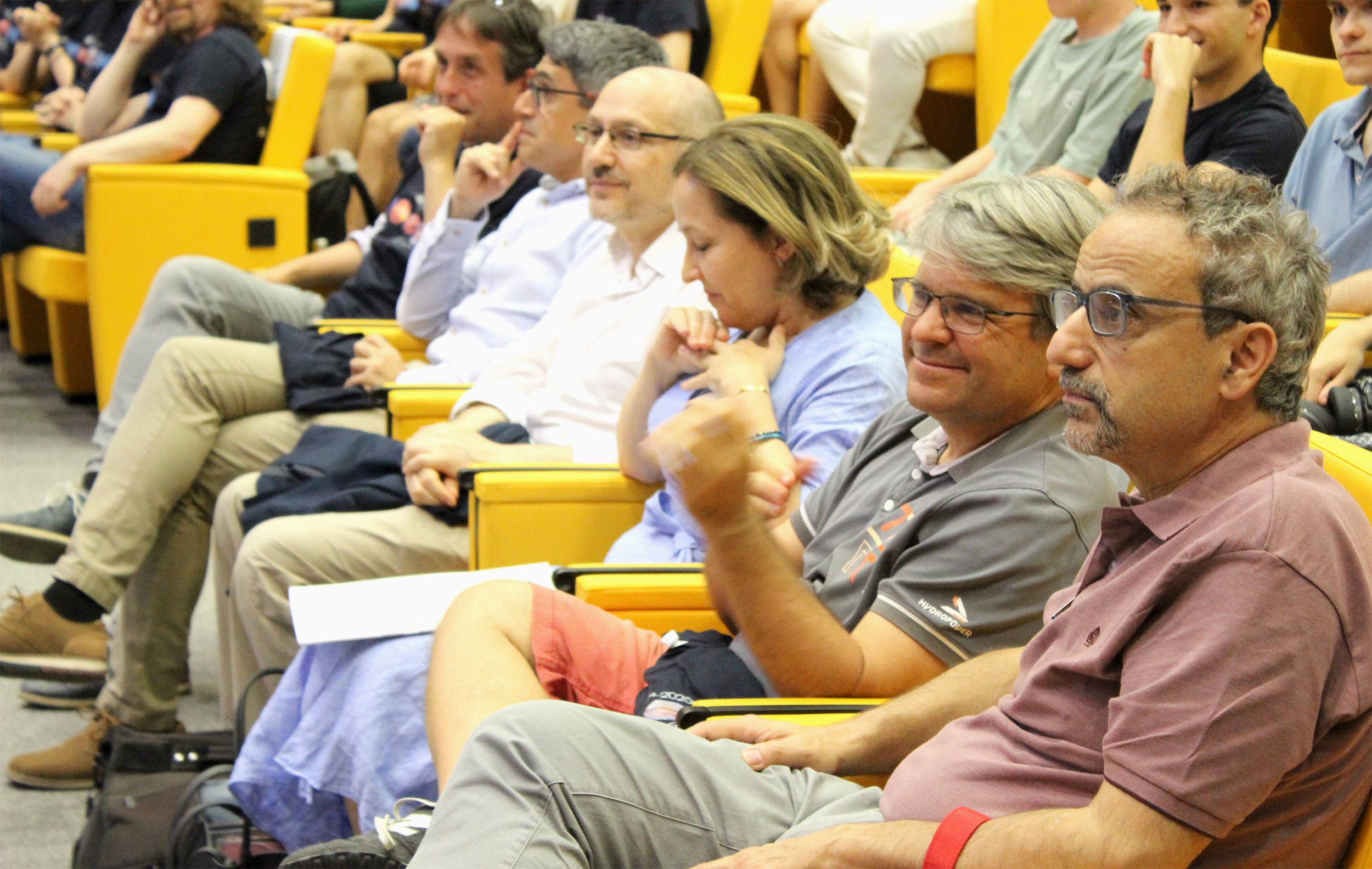
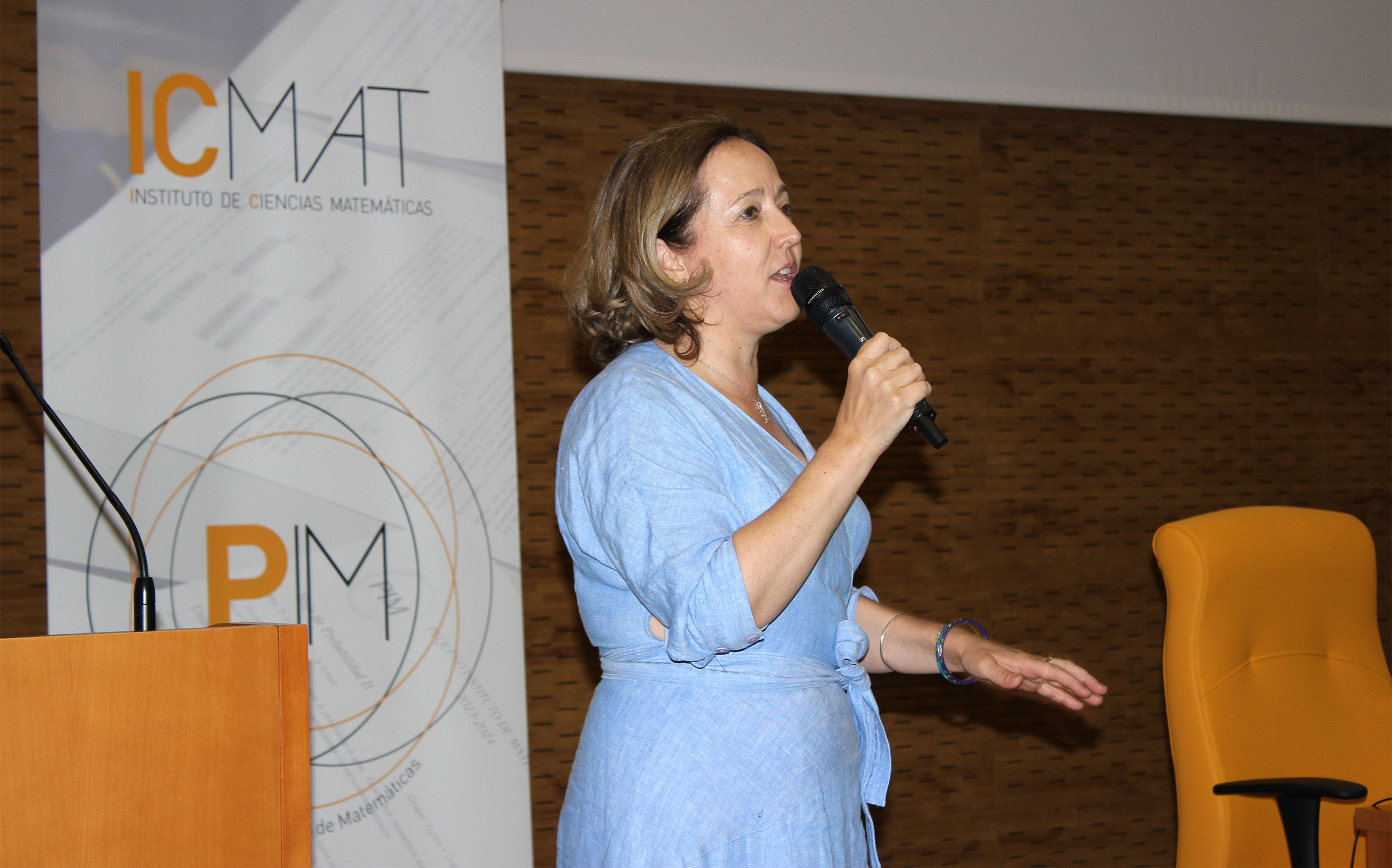
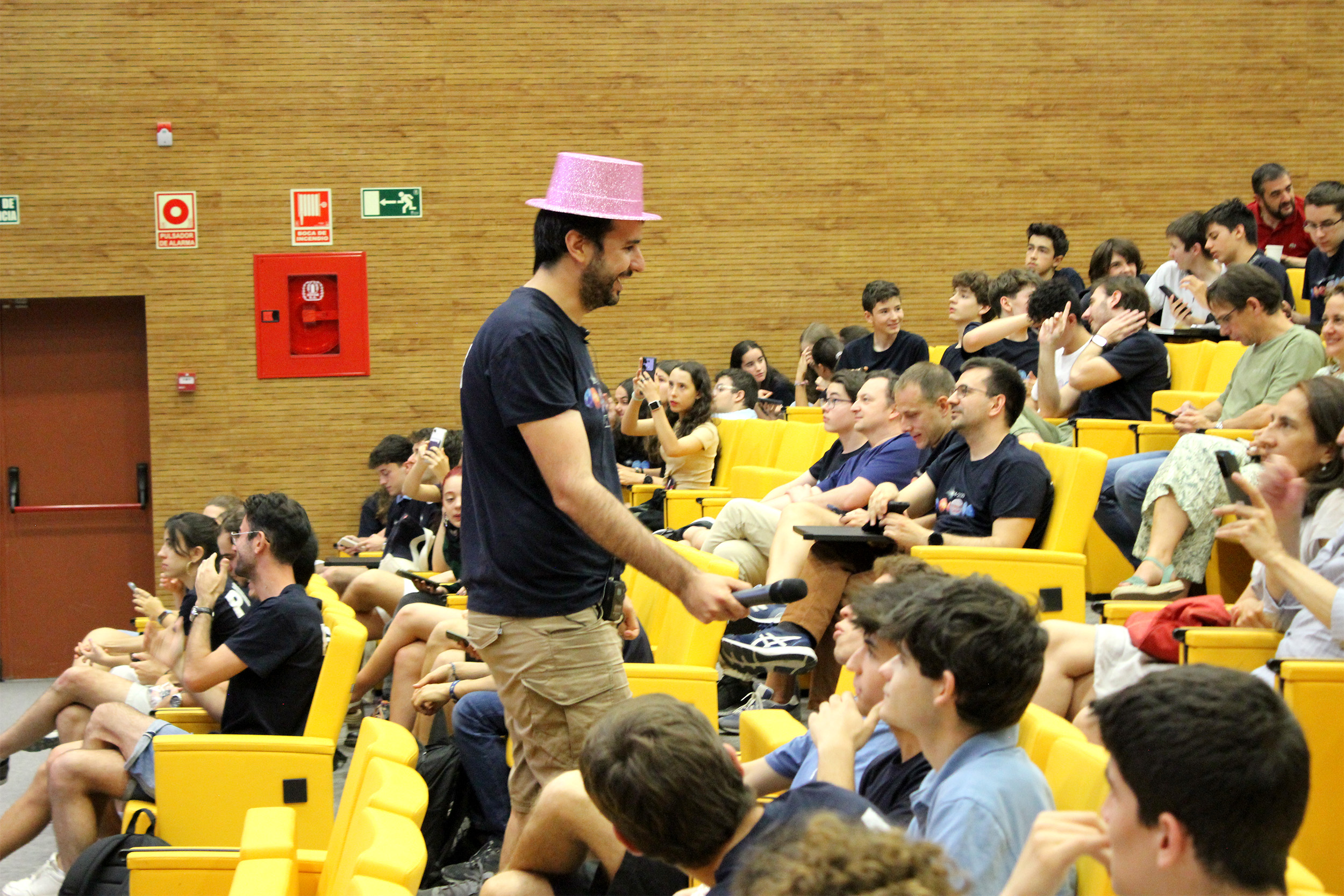
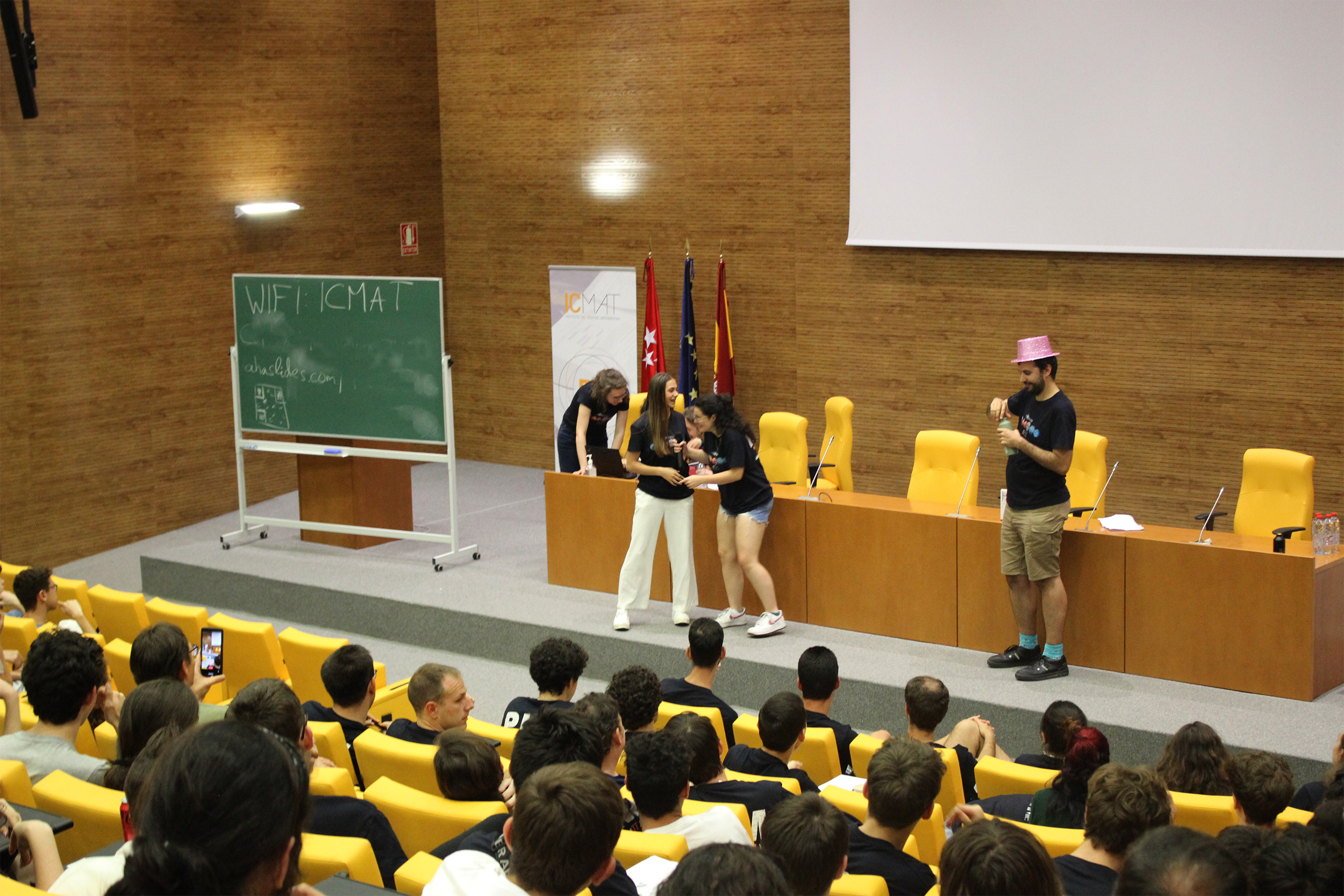
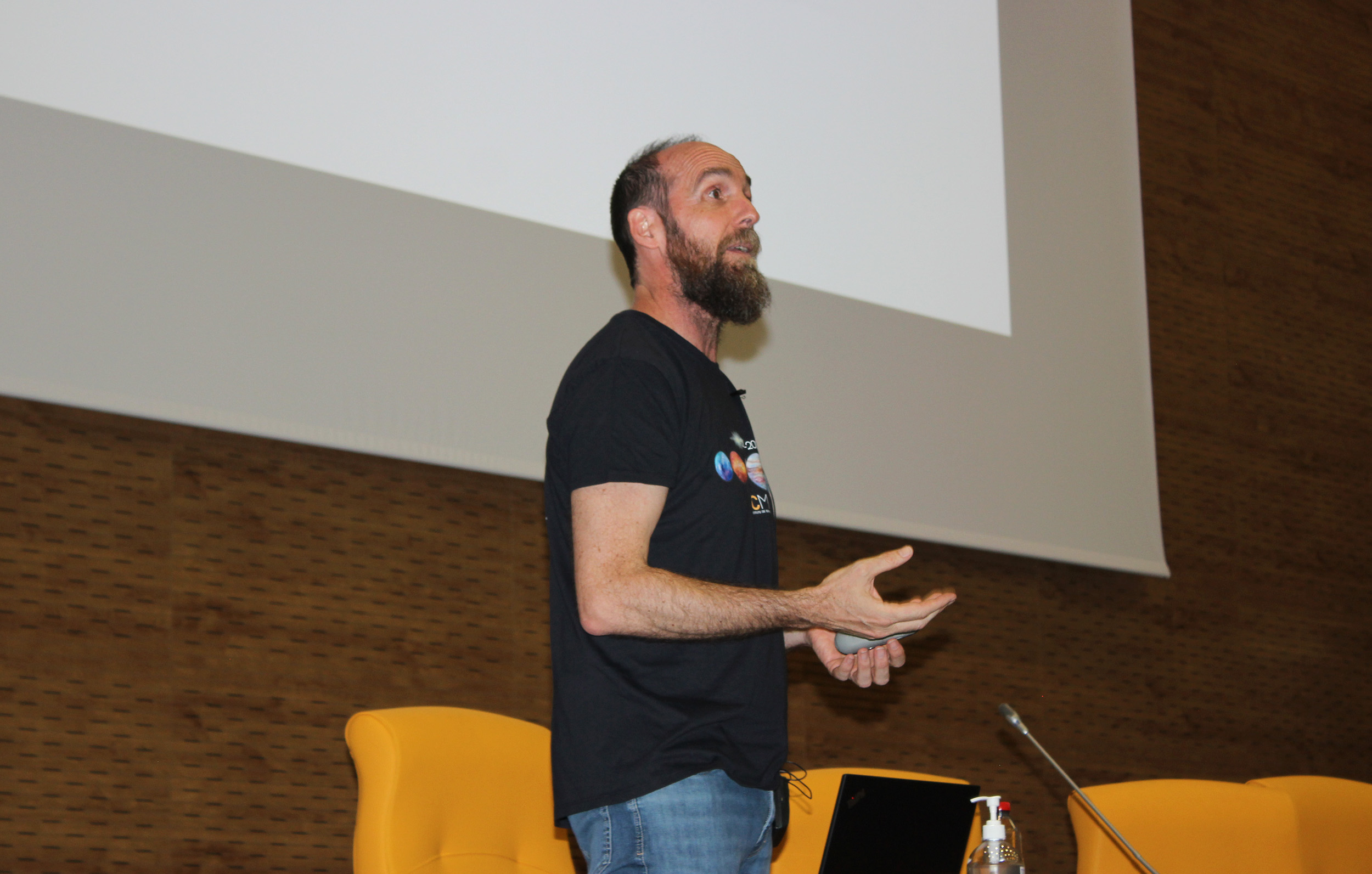
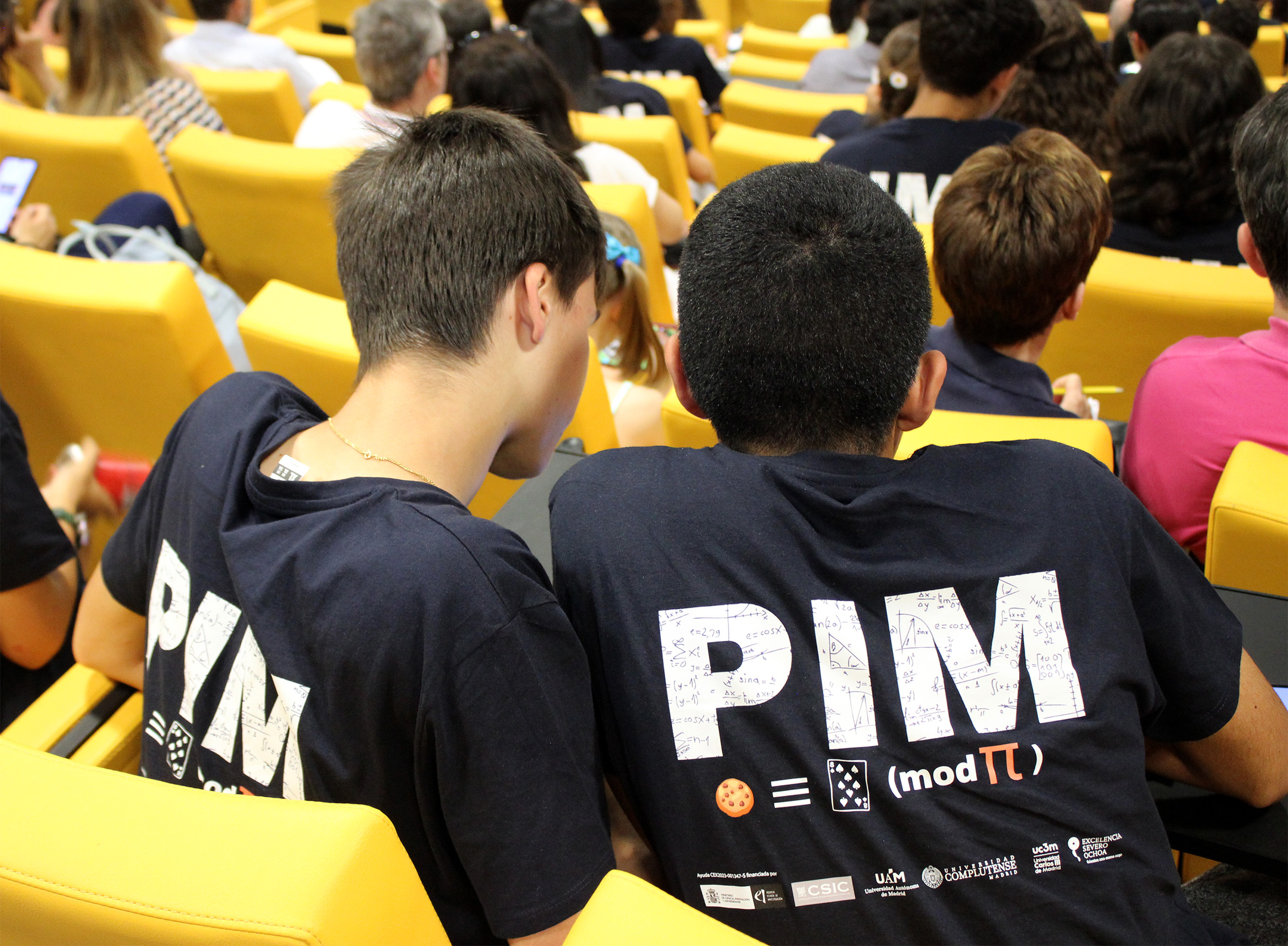
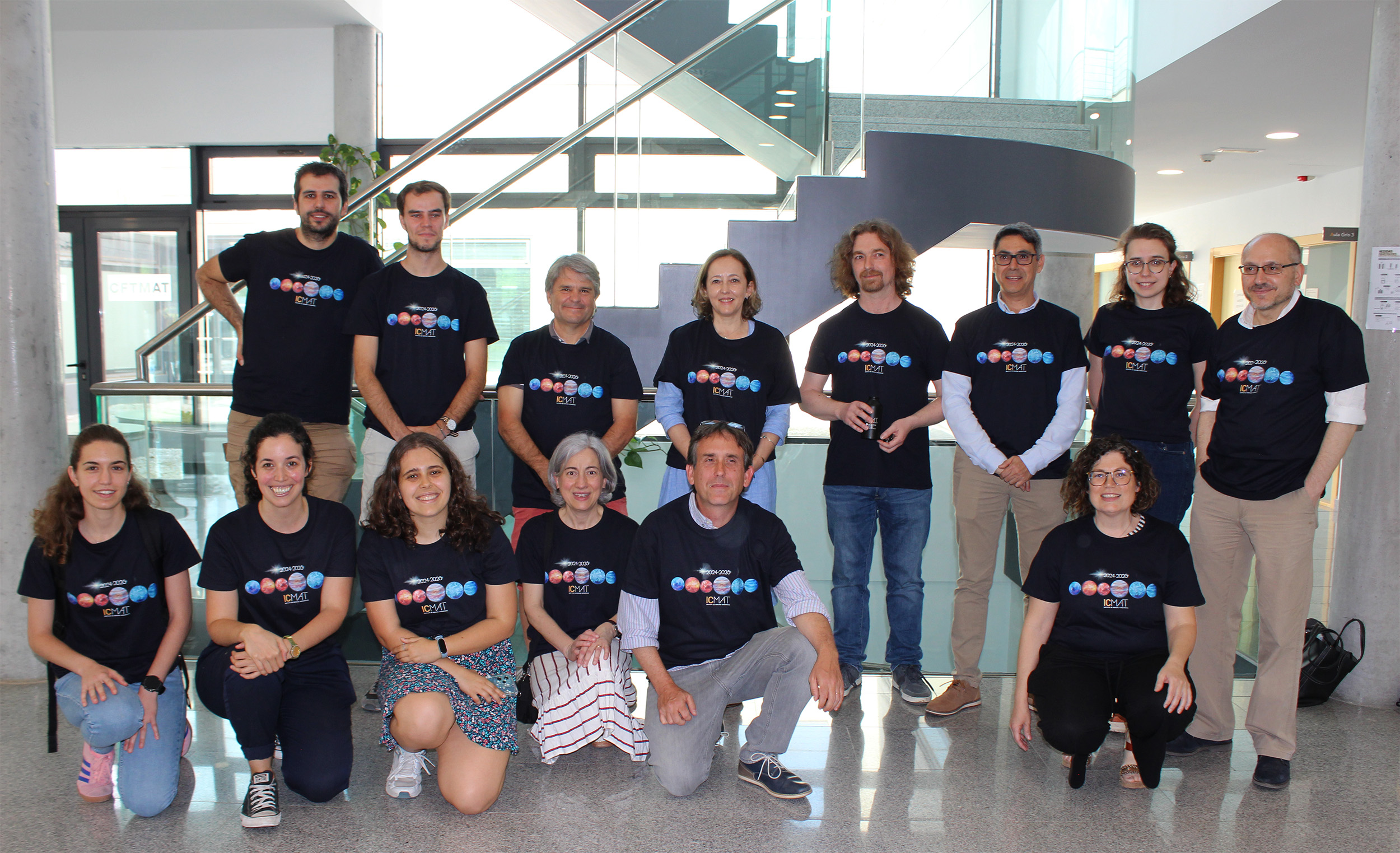
In the gallery, snapshots from the PIM 2024-25 end-of-year celebration. Image: Laura M Iraola/ICMAT.
Ágata Timón and Laura M. Iraola (ICMAT-CSIC). On Friday, May 30, the Small Institute of Mathematics (PIM) at ICMAT wrapped up the 2024-25 school year with a major event for participants and their families. It featured a lecture by professor, science communicator, and YouTuber Eduardo Sáez de Cabezón—whose channel, Derivando, has more than 1.5 million followers—on very large numbers and the limits of computers. In the second part of the event, attendees participated in a live math challenge competition. It took place at ICMAT, from 5:30 p.m. to 8:30 p.m., and was also attended by Eloísa del Pino, president of the Spanish National Research Council (CSIC); José María Martell, CSIC Vice President for Scientific and Technical Research; and Francisco Javier Moreno, Vice President for International Relations at CSIC.
In its third edition, the program brought together more than 150 students—an all-time record—aged 12 to 18, passionate about mathematics every Friday from 5:30 p.m. to 8:00 p.m. at ICMAT. “The goal of the PIM is to provide anyone who enjoys solving mathematical problems with the opportunity to face suitable challenges and share this interest with peers of similar age,” say the organizers—Andrei Jaikin (UAM-ICMAT), María Ángeles García Ferrero (CSIC-ICMAT), Eva Elduque (UAM-ICMAT), and Moisés Herradón Cueto (UAM).
“With the PIM I’ve realized that there are many ways to solve problems, that you can fail and try again and again” – Marta, PIM student
“With the PIM I’ve realized that mathematics goes beyond what I’ve learned so far, that it’s complex, that there are many ways to solve problems, and that you can fail and keep trying to find a solution,” explains Marta, a 16-year-old student. The project focuses on solving complex mathematical problems. “They reflect the challenges faced by STEM professionals in real life and showcase the diverse and multifaceted nature of mathematics,” the organizers explain.
Participants attempt to solve them individually and then in groups. “We do not promote competition but teamwork,” they declare. “As the weeks go by, it becomes clear that students have acquired problem-solving tools they didn’t have at the beginning. Their way of expressing themselves and working in groups also evolves: they contribute ideas, correct each other, and develop very positive group dynamics,” comments Alba García Ruiz, a PIM instructor and predoctoral researcher at ICMAT.
“Their way of expressing themselves and working in groups evolves: they contribute ideas, correct each other, and develop very positive group dynamics” – Alba García Ruiz, PIM instructor
Among the 30 instructors who support the students are math researchers and former PIM participants. “We try to stay in touch with students who show a special interest in a research career in mathematics,” they say. Marta Gost Casas, a second-year Mathematics student at the Complutense University of Madrid (UCM), is one of them. She is currently a project instructor after participating in the first PIM edition while in her second year of high school. That year, she won the local phase of the Spanish Mathematical Olympiad. However, she initially could not access the Mathematics degree at any public university in Madrid. This is one of many other cases of students who “undoubtedly should have the opportunity to study Mathematics and are left out,” state the organizers. “Fortunately, Gost was able to join the Mathematics degree in her second year at UCM, although not everyone is so lucky. We are seeing how students with a strong interest in the subject are being left out of Mathematics degrees due to the extremely high entrance scores required,” they affirm.
“We are seeing how students with a strong interest in the subject are being left out of Mathematics degrees due to the extremely high entrance scores required” – PIM organizers
This week, the University Entrance Exam (PAU) takes place across Spain, after which students can apply for university admission. If the trend from previous years continues, Mathematics—especially double degrees involving the subject—will remain among the most sought-after programs. “Some of the 35 PIM participants finishing this year want to pursue these degrees. However, not all may gain access, as the available places are often filled by students with very high grades that do not always reflect a genuine interest in the subject,” warn the organizers.
A place to enjoy the pleasure of doing mathematics
“The PIM is not intended to improve the academic performance of its participants, nor should it be seen as an early way to boost a résumé, or as an excellence program,” say the organizers. However, “it’s true that we observe an evolution in participants’ reasoning abilities. Like any other skill, it improves with practice—and practice is more frequent when it’s enjoyable,” they note. For this reason, the most important requirement for participating in the PIM is a special interest in mathematics.
Admission for the 2025–26 course is open and can be done through the project website. A prior test is required, which “under no circumstances should be seen as a way to select an elite group of students. The test is simply designed to assess candidates’ interest in mathematics and abstract reasoning,” they say. This year, there will be an in-person test on June 6, 2025, at ICMAT (for which registration is required), though it’s also possible to take the test at other times during the year (instructions are available on the website).
“We want to encourage girls, and in general, students from groups historically underrepresented in the mathematical community, to take part” – Eva Elduque, PIM organizer
“The PIM is for everyone who is interested, and in particular, we want to encourage girls and students from groups historically underrepresented in the mathematical community to participate,” adds Eva Elduque.
A program inspired by mathematical circles
Andrei Jaikin, professor at UAM and researcher at ICMAT, participated in mathematical circles during his childhood in Moscow. “In Russia it’s very widespread. I used to attend one of these circles linked to Moscow University. Like in the PIM, we were given a sheet of problems, solved them at home, and then discussed our solutions at the university meetings,” he recalled in an interview for *Magisterio*. When he proposed the idea to the rest of the organizers in 2021, he was also inspired by the Estalmat program, which has been promoting early mathematical talent in much of Spain for over 25 years. “At that time, my daughter was 15 and had already completed the two years of Estalmat. Her experience and mine, at her age, made me think it would be interesting to create something similar to what I had as a child,” he says.
Eva Elduque, Ramón y Cajal researcher at UAM and ICMAT member, and Moisés Herradón, also a Ramón y Cajal researcher at UAM, had organized and participated in the mathematical circle at the University of Wisconsin-Madison. Herradón also represented Spain at the International Mathematical Olympiad (IMO), the world’s most prestigious math competition, in which Spain has only won five silver medals and no gold in 50 years of participation. “Both had been involved in outreach activities aimed at teenagers, and we decided to start something similar to a math circle based on our experience,” Jaikin explains.
In the latest edition, María Ángeles García Ferrero, a CSIC research scientist at ICMAT, joined the organizing team.
—
This content has been automatically translated. The original text may differ slightly.