
Speaker: Florin Diacu (Department of Mathematics and Statistics, University of Victoria, Canada)
Introduced by: David Martín de Diego (ICMAT)
Date and time: 17 December 2015, 19:30
Venue: Residencia de Estudiantes (c/ Calle del Pinar, 21-23, 28006 Madrid)
Organised by: ICMAT, Residencia de Estudiantes, Deputy Vice-Presidency for Scientific Culture, CSIC
Abstract: What if we were not in the year 2015? Chronology is usually presented as an absolute truth, but its construction is based on a series of hypotheses and assumptions. At school we learn that Rome was founded in 753 BC, that the Battle of Hastings took place in 1066, or that the Turks reached the gates of Vienna in 1683. The last of these dates is beyond doubt, but the further back in time we go, the more likely we are to encounter approximations. How can this be known? Have historians not kept a reliable record? The answer, surprisingly, is no.
Historical chronology, as we know it today, was established during the reform of the Gregorian calendar in the late 16th century. Until then, it was not entirely clear when the events described in different documents actually took place. The reason is simple: documents describe events in terms of different calendars and relatively obscure dates, such as “the battle took place 32 years after the death of Alexander.” Which Alexander are they referring to, and when did he die? Unfortunately, the period of collective memory is very short.
This lecture will explore the fascinating aspects of how the global historical chronology was created and the enormous difficulties faced by its founders, how it survived despite fierce opposition from historians and scientists – among them Isaac Newton – and why it is still challenged by figures such as Immanuel Velikovsky and scholars such as mathematician Anatoly Fomenko. Special attention will be paid to the role that mathematics plays in historical chronology today, and why celestial mechanics remains essential for dating historical events.
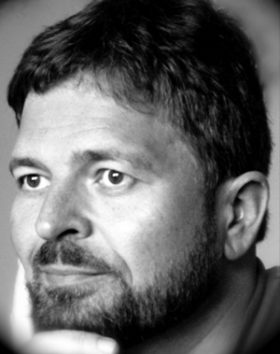
Florin Diacu graduated in Mathematics from the University of Bucharest (Romania) and completed his PhD at the University of Heidelberg (Germany) in 1989. He is currently a professor in the Department of Mathematics at the University of Victoria (Canada) and Vice-President of the Canadian Mathematical Society (CMS). His field of research is celestial dynamics, and he has made significant contributions to the n-body problem. His “novel approach to the n-body problem in curved space, which combines dynamical systems, differential geometry, and geometric and celestial mechanics in a lucid and inspiring way” earned him the prestigious J.D. Crawford Award in 2015. Although he ultimately pursued a career in mathematics, he has always had a passion for history. The study of chronology through celestial dynamics has allowed him to combine both fields. As a result of this research, he published the book The Lost Millennium. History’s Timetables Under Siege, in which he presents different views on chronology.