ICMAT Alumni
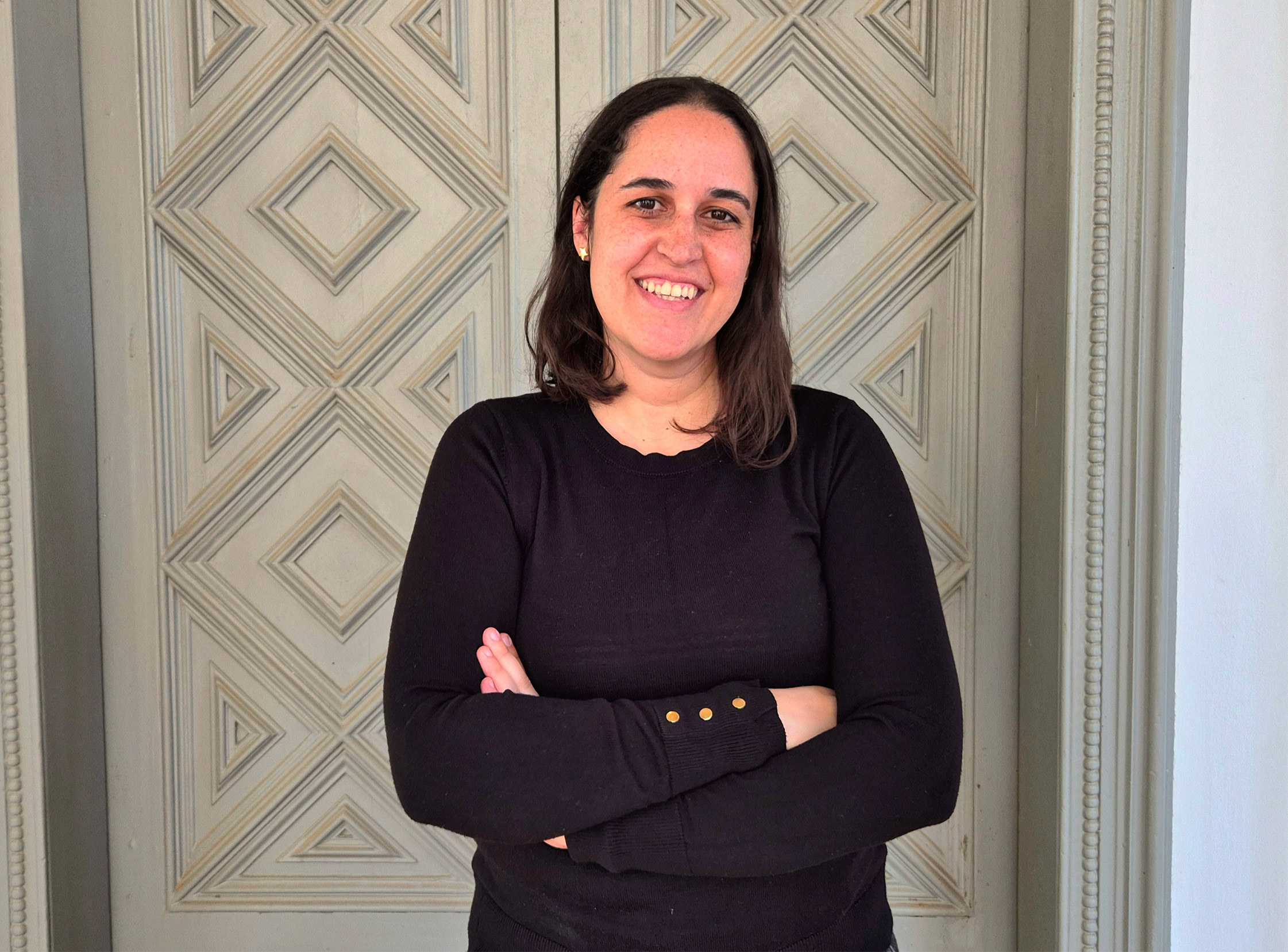
Jezabel Curbelo. Image courtesy of the researcher
Jezabel Curbelo (1987, Los Realejos, Tenerife)
Current position (as of 01 October 2026): Professor at the Universitat Politècnica de Catalunya
Research area: Geophysics and fluid dynamics
PhD thesis at ICMAT: “Instabilities in geophysical fluid dynamics: the influence of symmetry and temperature dependent viscosity in convection”, supervised by Ana María Mancho (ICMAT-CSIC). Defence date: 25-04-2014
Mathematician Jezabel Curbelo has built a nationally and internationally recognised academic career through her contributions to the fields of geophysics and fluid dynamics. Her career has earned her the 2025 National Research Award for Young Researchers, awarded by the Ministry of Science, Innovation and Universities. This adds to a long list of honours, including the Vicent Caselles Award from the Spanish Royal Mathematical Society (RSME) and the BBVA Foundation in 2015; the Antonio Valle Award for Young Researchers from the Spanish Society of Applied Mathematics (SeMA) in 2020; and the L’Oréal-UNESCO For Women in Science Award in 2021. Most recently, she received the Jacques Louis Lions Award in the field of computational mathematics, awarded in July by the European Community on Computational Methods in Applied Sciences (ECCOMAS).
Curbelo began working at the Universitat Politècnica de Catalunya in 2019 on a Ramón y Cajal contract from the Ministry of Science, Innovation and Universities, and is currently a Professor there. Her first steps into research came through a summer research internship at ICMAT, which she undertook while studying for a degree in Mathematics at the University of La Laguna (Tenerife). In 2014, she defended her PhD thesis at ICMAT, supervised by Ana María Mancho (ICMAT-CSIC).
Laura M. Iraola (ICMAT)
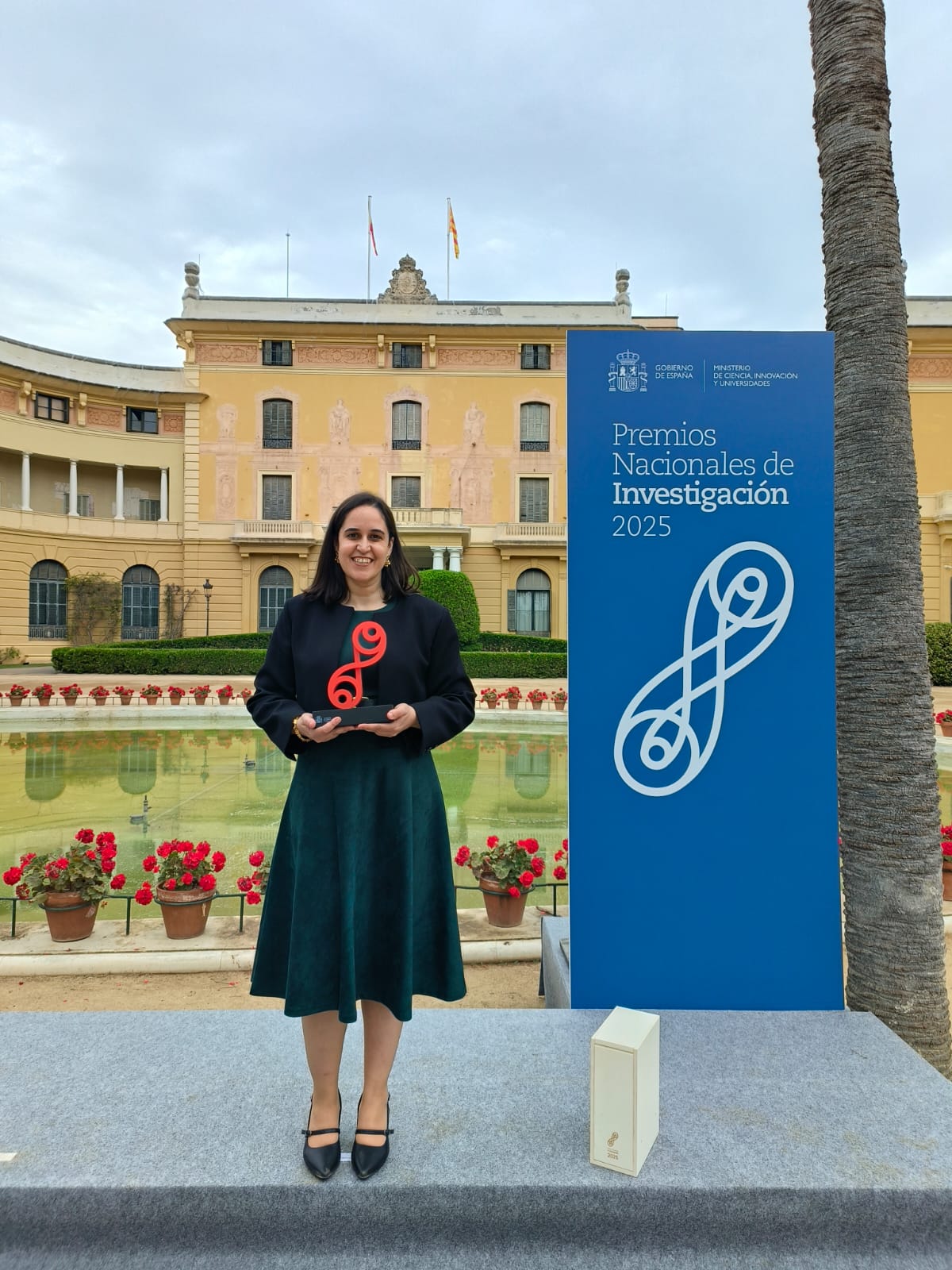
Jezabel Curbelo at the 2025 National Research Awards ceremony. Image courtesy of the researcher
Jezabel Curbelo, Professor at the Universitat Politècnica de Catalunya, has recently received the 2025 National Research Award for Young Researchers in the field of mathematics and information and communications technologies, awarded by the Ministry of Science, Innovation and Universities. The jury recognised “her outstanding career in mathematics applied to geophysics and fluid dynamics, with pioneering contributions to turbulent transport, thermal convection and planetary dynamics”.
Curbelo’s journey to this point began when she was studying Mathematics at the University of La Laguna (Tenerife). In the summer of 2008, after completing her third year, she had her first experience of research thanks to an ICMAT research internship, which she undertook under the supervision of Ana María Mancho, a CSIC research scientist at ICMAT, who would later become her PhD supervisor. “That period was fundamental because it taught me that research is about much more,” says Curbelo. “I learnt the value of the connections and friendships that are formed outside the office and how motivating it is to grow in an environment with colleagues who share your interests and challenges,” she adds.
A year later, she completed her Master’s degree in Mathematics and its Applications at the Autonomous University of Madrid before returning to ICMAT to pursue a PhD in geophysics and fluid dynamics, again under Mancho’s supervision. “At ICMAT, I learnt what research really means and how it is done at the highest level,” she says. “I also understood that research is a collective process; much of what you learn comes from talking to other people, sharing ideas and discussing problems. I also discovered the importance of patience, as a PhD teaches you to learn from your mistakes and keep moving forward,” she explains.
Studying the behaviour of the ocean and atmosphere
Curbelo is particularly drawn to questions that connect theory and applications, which is reflected in her field of research: from a mathematical perspective, she studies the movement, mixing and behaviour of different geophysical fluids, such as the ocean and atmosphere. “I am fascinated by exploring those points of connection between disciplines, where mathematics can provide solutions with a real-world impact,” she explains. “My motivation is to understand how fluids in nature organise themselves and are transported, and what rules determine their behaviour. I am also attracted by the way mathematical tools can be applied to very different problems,” she says.
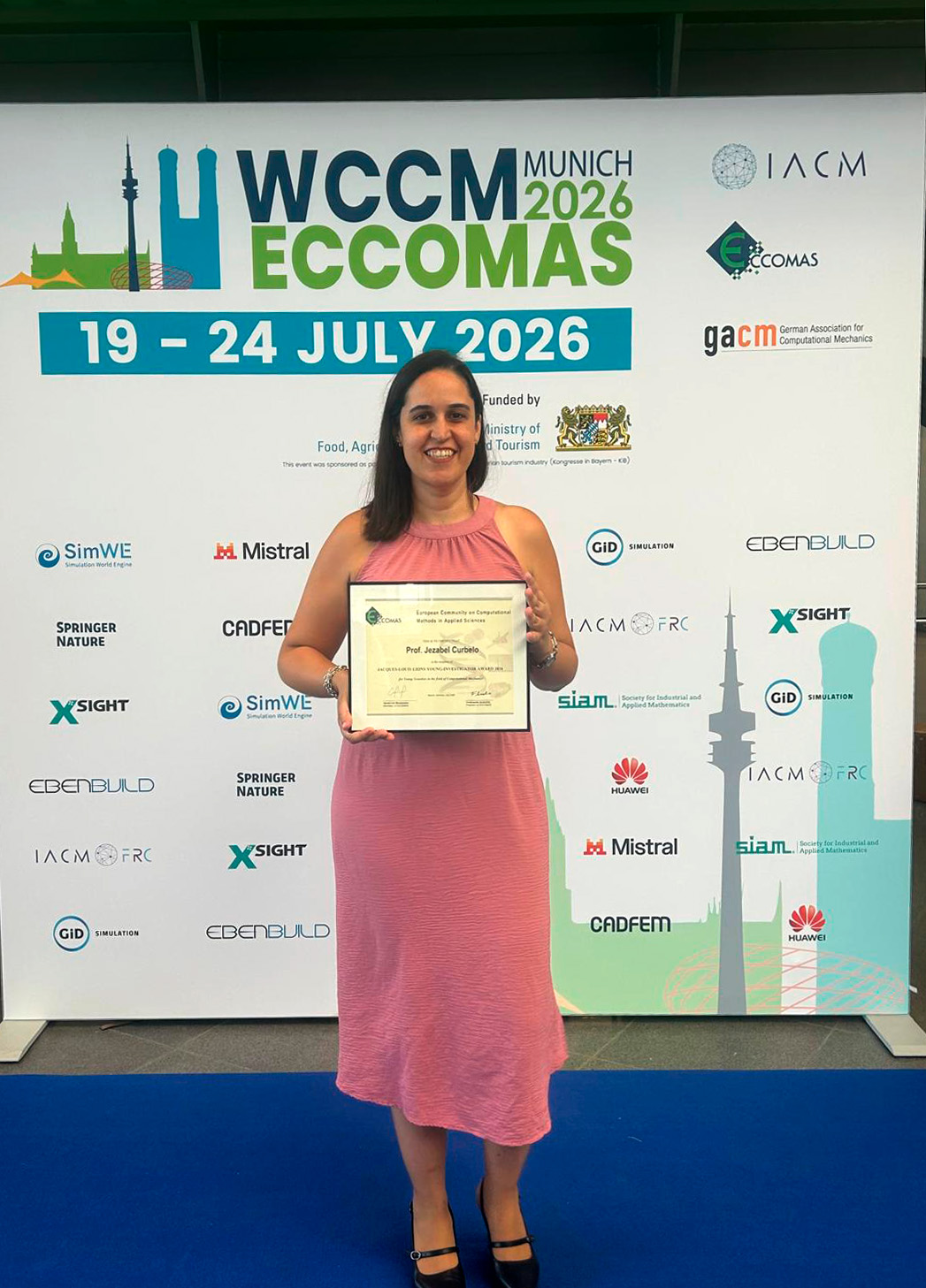
Curbelo’s most recent honour is the 2026 Jacques Louis Lions Award from ECCOMAS. Image courtesy of the researcher.
One of the tools Curbelo refers to is the so-called Lagrangian particle-tracking methods. In other words, “instead of analysing what happens at a fixed point in the fluid [as is done with more traditional tools], these methods allow us to follow the movement of particles to better understand how transport and mixing occur,” she explains.
Beyond their applications in geophysics, Lagrangian techniques are a fundamental tool for studying mechanical systems and transport and mixing processes. They provide a framework for addressing physically very different systems, including problems in magnetohydrodynamics, transition-state theory, chemistry, cardiovascular flow analysis and billiard dynamics, among others.
Curbelo currently applies these tools in the context of climate change, as part of the project Deciphering Climate Change: Lagrangian Coherent Structures in Atmospheric and Oceanic Flows as Indicators, funded by the Ramón Areces Foundation. In addition, through another project awarded by the Ministry of Science, Innovation and Universities, she is working on applying a dynamical perspective to study various geophysical fluid systems using different techniques based on particle trajectories and spectral clustering methods for these trajectories.
Beyond mathematics
Curbelo says that she takes advantage of the conferences she attends for work to get lost in unfamiliar cities, discover their architecture and enjoy the local cuisine. She is also passionate about theatre and cinema and particularly enjoys dancing. She took up salsa classes during the final year of her PhD as a way to switch off and, since then, dancing has become an activity that not only gives her pleasure but also helps her relax and clear her mind.
—
This text is an automatic translation from the original Spanish version.