
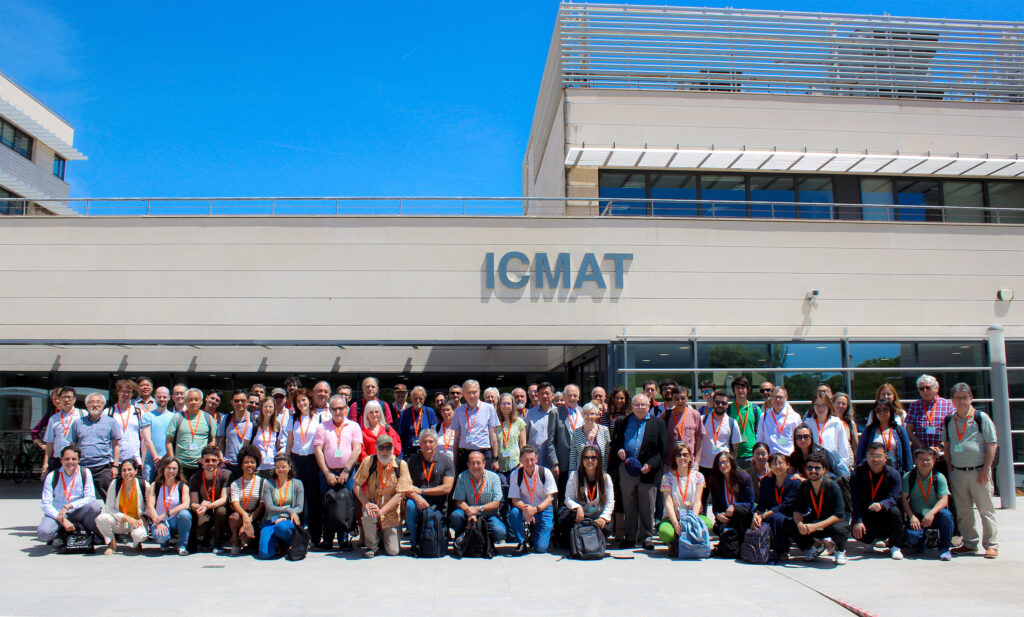
Nearly one hundred participants attended the 5th International Conference on Dynamics of Differential Equations. Image: Laura M. Iraola (ICMAT)
From May 25 to 29, the Institute brought together the world’s leading specialists at a conference honoring the legacy of Jack K. Hale
Most physical phenomena, from planets orbiting the Sun to a drop of ink dissolving in water, as well as the spread of an epidemic, can be described using the same mathematical tools: differential equations. Their long-term evolution is precisely the subject of study in the field of dynamical systems. From May 25 to 29, the Institute of Mathematical Sciences (ICMAT) in Madrid hosted the fifth edition of the International Conference on Dynamics of Differential Equations, one of the leading international events in this field.
The conference, co-organized by José M. Arrieta and Phillipo Lappicy (both professors at the Complutense University of Madrid and members of ICMAT), together with Yingfei Yi (University of Alberta, Canada), brought together specialists from different generations and mathematical backgrounds with the goal of creating an environment conducive to exchange. “Experience shows that many of the most fruitful ideas arise precisely when researchers with different perspectives have the opportunity to exchange problems, techniques, and points of view,” the organizers noted.
Beyond Solutions
Finding explicit solutions to the equations that define the precise state of a system at every moment in time is generally a very difficult task (if not impossible), and in many cases it is not as relevant as understanding its structure and qualitative behavior. Do solutions tend toward a stable equilibrium? Do they oscillate periodically? Or can the system become chaotic? These are the types of questions studied in the field of dynamical systems.
“What is remarkable is that these behaviors appear in very different systems and give rise to unifying mathematical concepts such as stability, bifurcation, attractors, or chaos,” explain the local organizers. This approach, which began with the French mathematician Henri Poincaré in the nineteenth century, has had a vast impact: “Dynamical systems provide the common language for describing phenomena in physics, engineering, biology, chemistry, economics, neuroscience, and climate science,” they add.
A technical distinction that marks the difficulty of problems is that of the state space. When a dynamical system is described by ordinary differential equations, that space is finite-dimensional and many analytical and geometrical tools work well. But when delay equations or partial differential equations come into play, the system comes to live in a function space of infinite dimension. “Many of the geometrical and analytical tools developed for finite-dimensional systems are no longer directly applicable,” warn Arrieta and Lappicy. Familiar intuitions break down and new theory must be built from the ground up. “The study of infinite-dimensional dynamical systems is currently one of the topics driving the evolution of the field,” they state.
The Architect of a Field
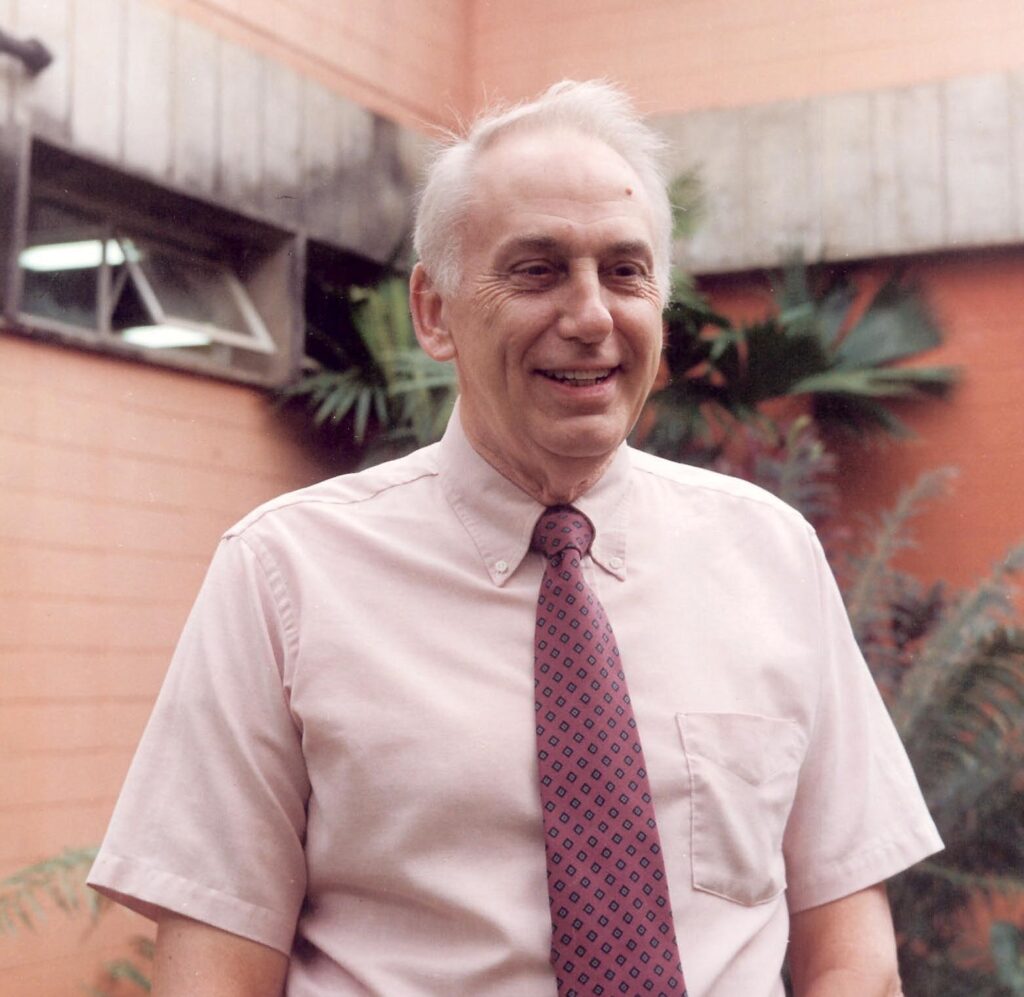
Jack Kenneth Hale (1928–2009) was an American mathematician specializing in dynamical systems and functional differential equations. Image: Hale family files.
The conference bears the name of Jack K. Hale (1928–2009), who was, in the words of the local organizers, someone who “not only solved important problems: he helped define the field itself.” His most transformative contribution was precisely this transition to infinite dimensions: he was the one who understood that delay differential equations should be studied as dynamical systems in function spaces. “That change of perspective completely transformed the field and laid the foundations for a theory that is now standard and has applications in engineering, physics, biology, and control theory,” emphasize Arrieta and Lappicy.
His influence was also reflected in a series of books that educated entire generations of mathematicians — Ordinary Differential Equations (1969), Functional Differential Equations (1971), Methods of Bifurcation Theory (1982), and Asymptotic Behavior of Dissipative Systems (1988). He was one of the founding editors (in 1965), together with Solomon Lefschetz and Joseph Lasalle, and editor-in-chief (from 1984 until his death in 2009) of the Journal of Differential Equations, a scientific journal that has served, from its inception to the present day, as a leading forum for the dissemination and discussion of these ideas.
Arrieta and Lappicy insist that his legacy goes far beyond mathematical results: “His influence remains not only in his books and articles, many of which are still classics, but also in the ideas that structure the field, in the generations of mathematicians he trained, and in the institutions he helped create.” He promoted the Lefschetz Center for Dynamical Systems at Brown University (USA) and, together with Shui-Nee Chow, founded the Center for Dynamical Systems and Nonlinear Studies at the Georgia Institute of Technology (USA), “recognized at the time as one of the world’s leading research centers in dynamical systems.”
The Hale Lecture: Two Directions for the Future
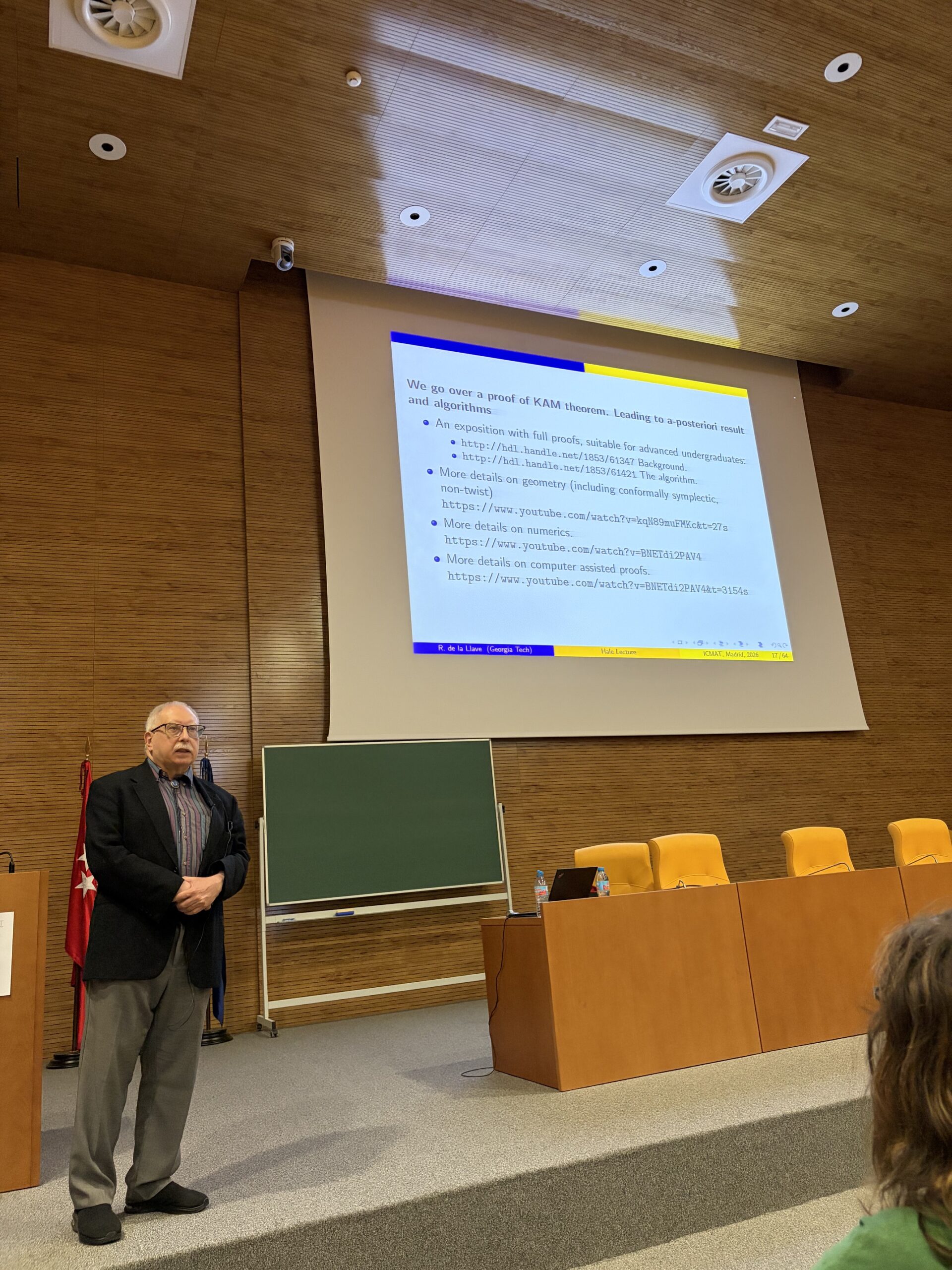
One of the highlights of the conference was the Hale Lecture, the honorary lecture delivered this year by Rafael de la Llave (Georgia Institute of Technology, USA). The organizers describe him as “one of the most influential researchers of his generation,” whose goal has always been “the search for and identification of structures that organize the dynamics of complex systems,” combining analytical, geometrical, and computational tools.
His lecture, entitled Two Directions for the Future, outlined a roadmap for how the discipline may grow. The first direction points to a problem with a concrete physical motivation: constructing solutions of equations with delays and advances that depend on the system’s own dynamics. This is motivated by demanding models such as those describing the interaction between charged particles and electromagnetic fields, where the present may depend on both the past and the future state of the system itself.
The second direction focused on KAM theory, one of the great achievements of twentieth-century mathematics, which describes the survival of certain quasiperiodic motions under perturbations. According to de la Llave, this branch is evolving into a computational discipline in which computer-assisted proofs, new computing architectures, and artificial intelligence are being integrated to tackle celestial mechanics problems that have so far remained out of reach.
-
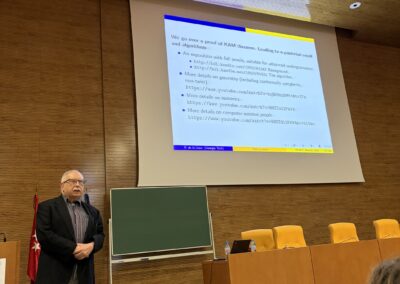
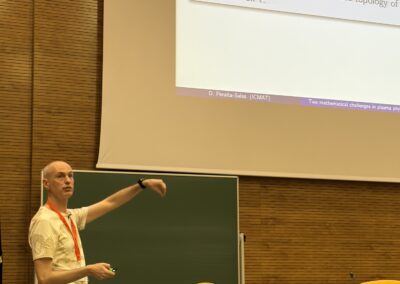
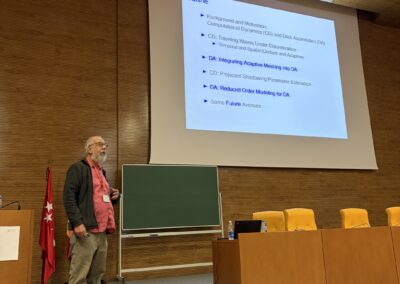
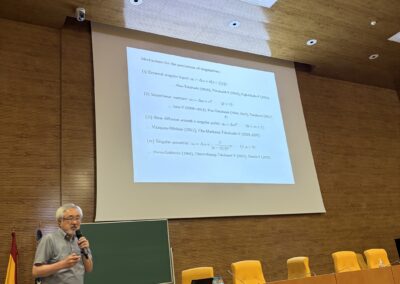
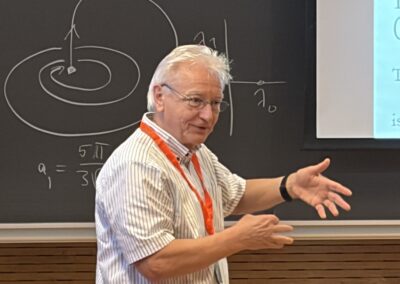
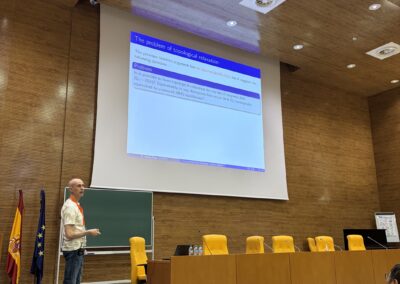
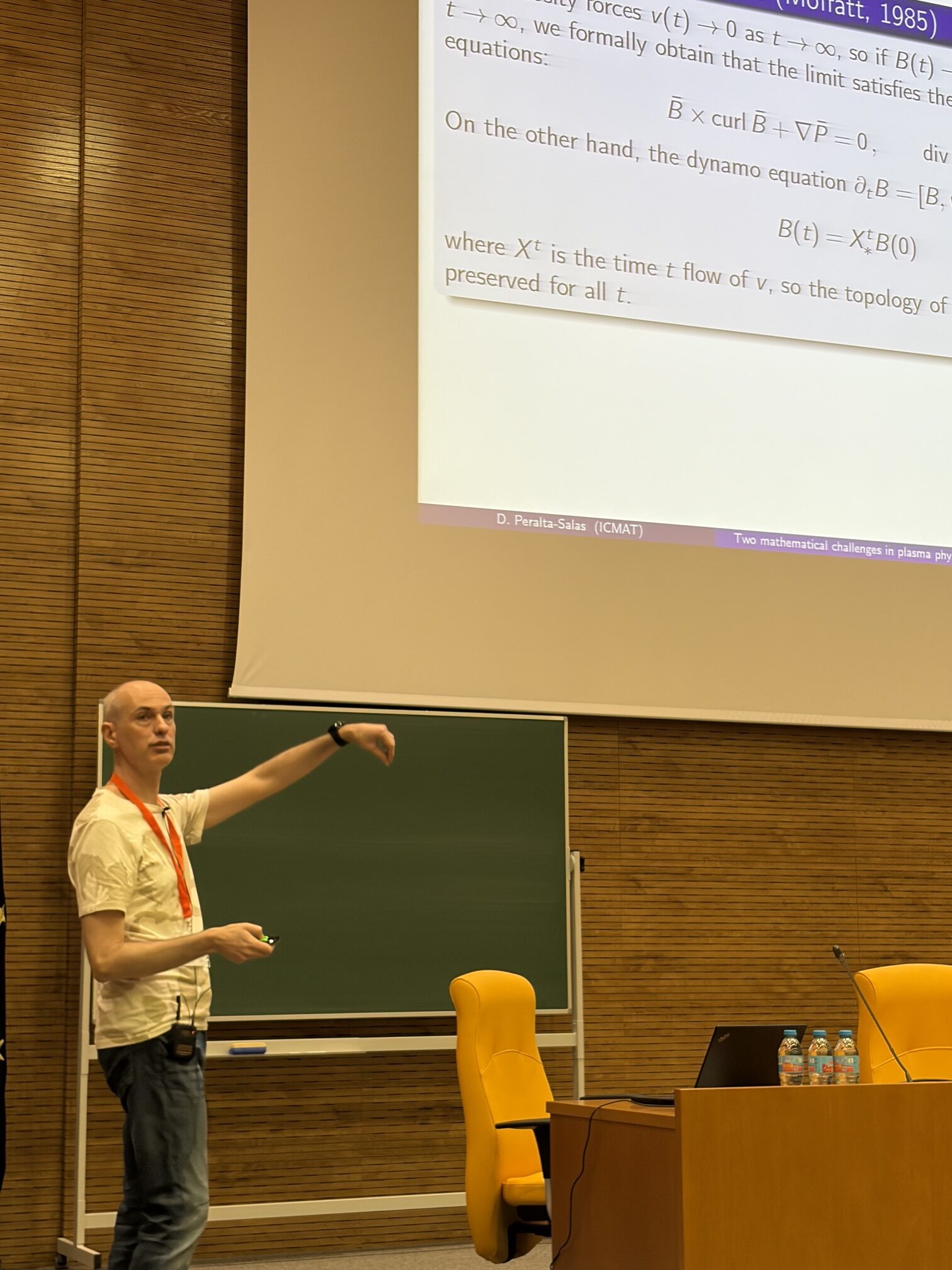
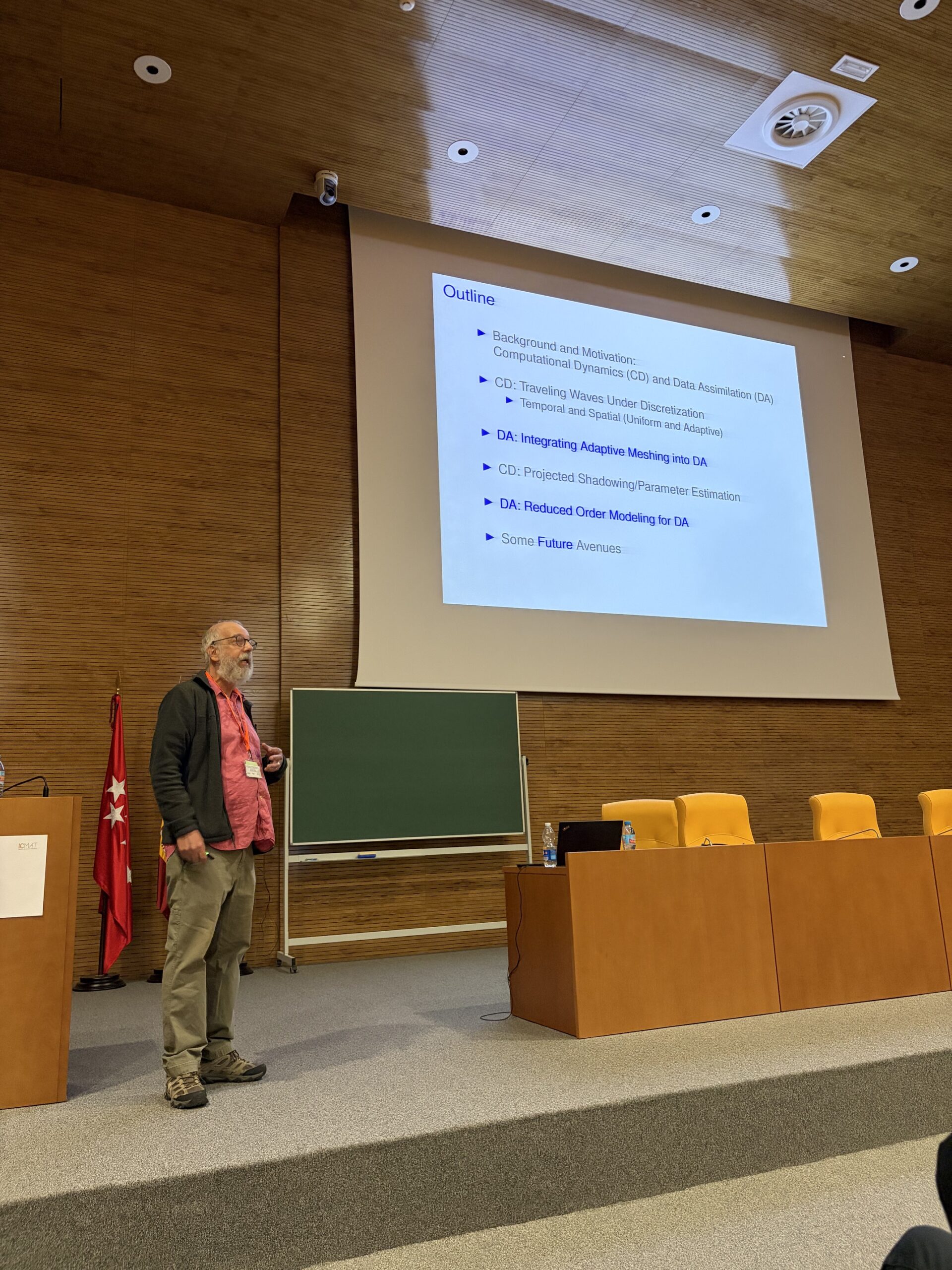
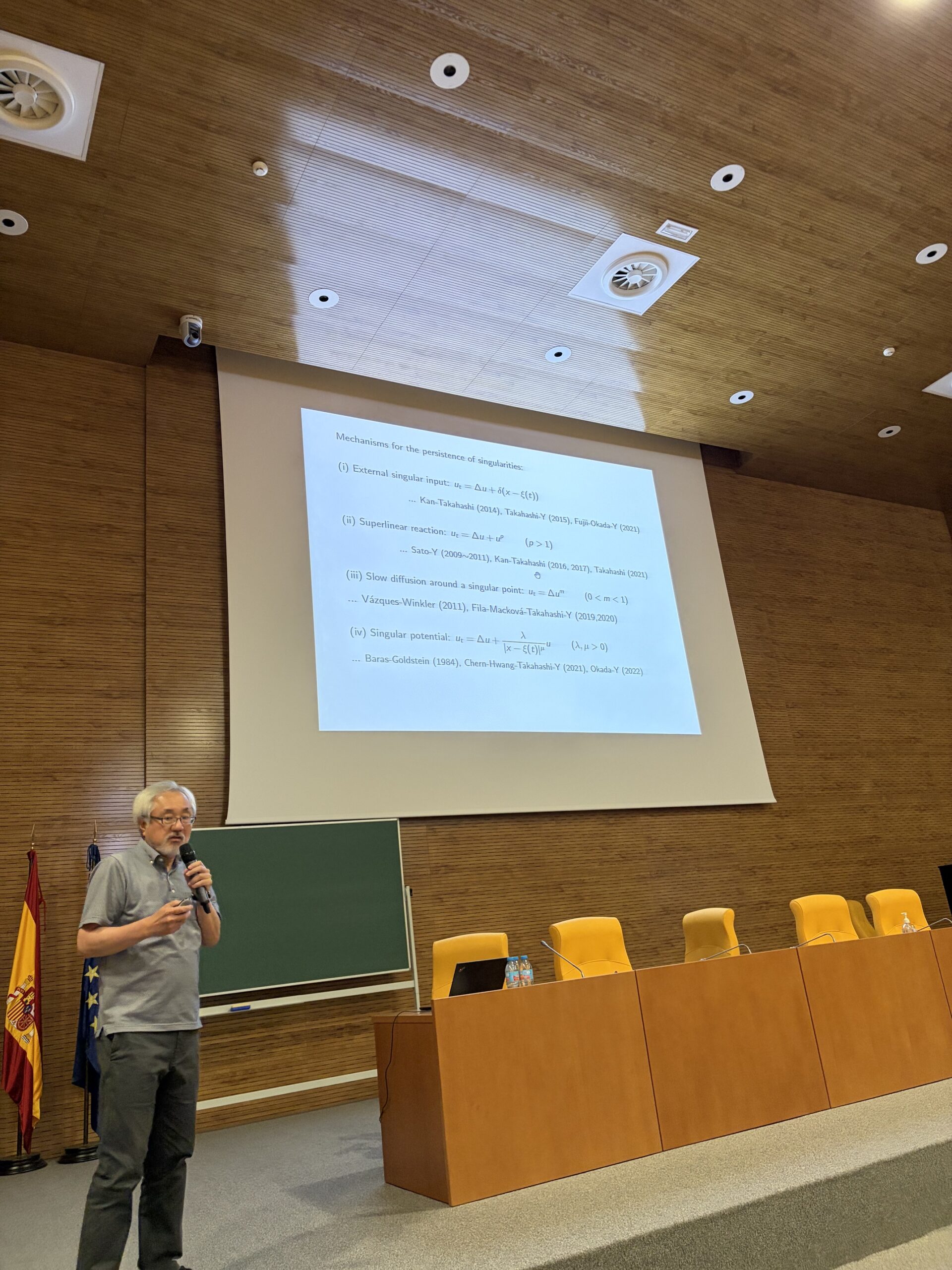
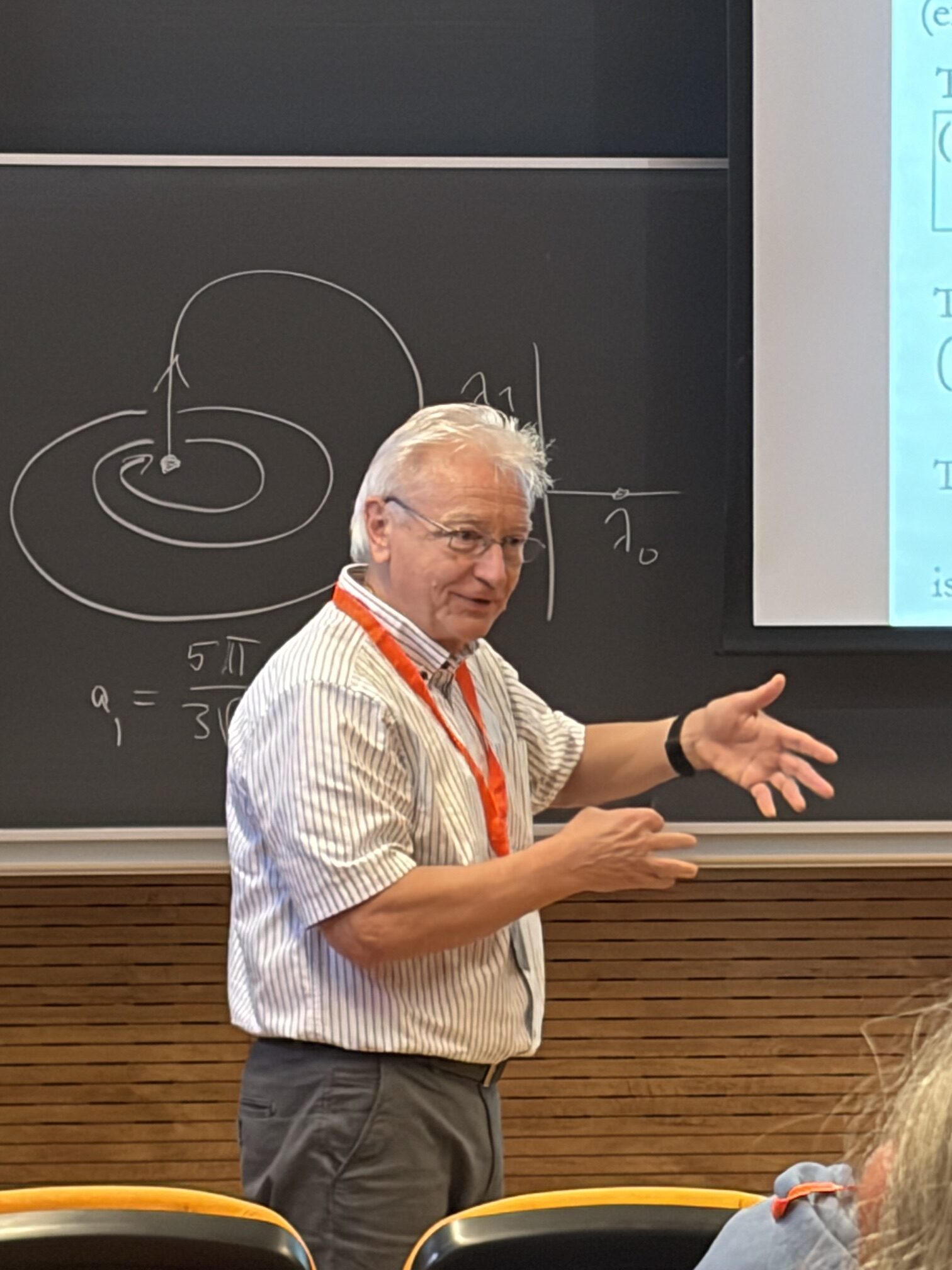
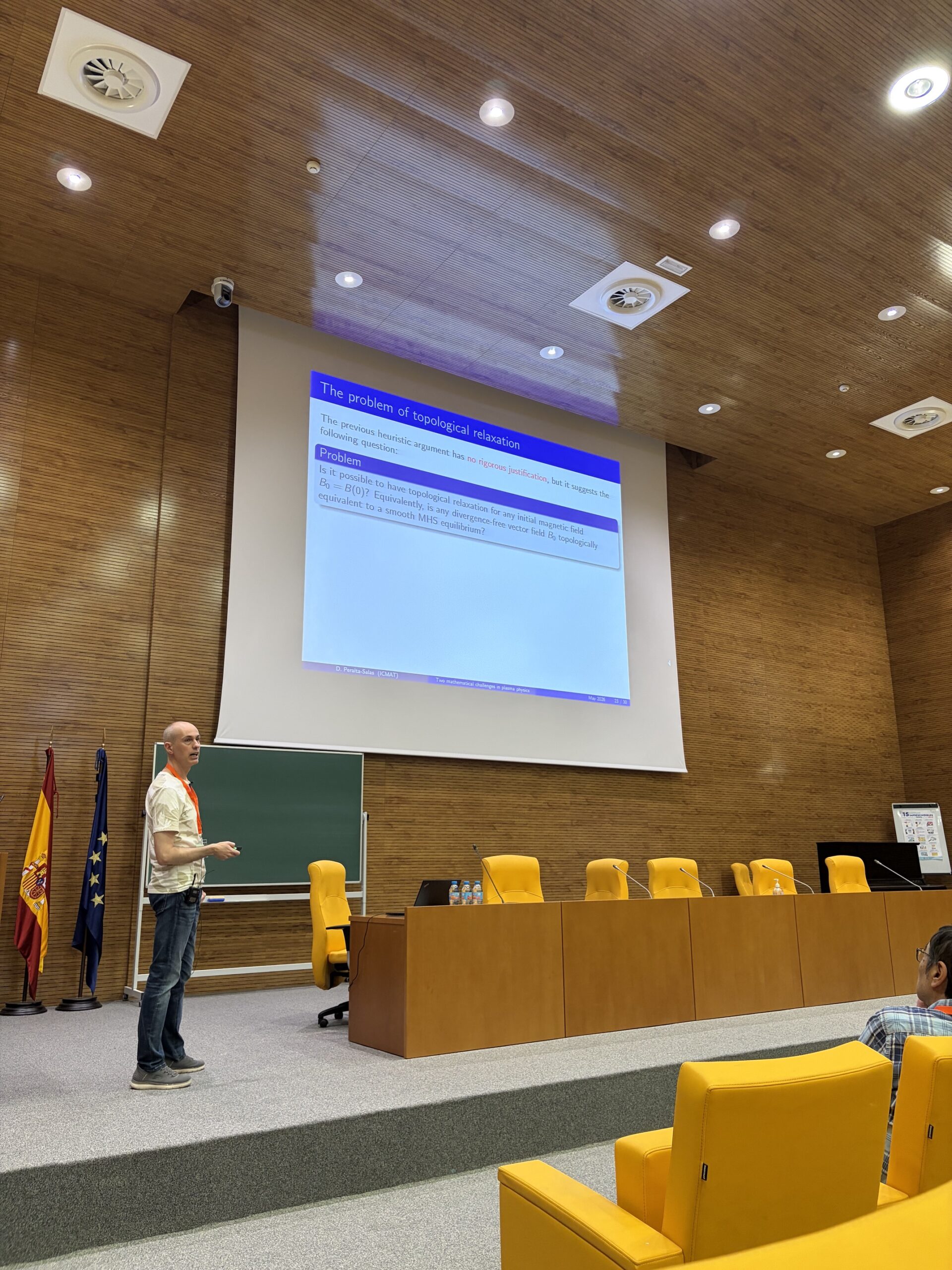
Above are photos of some of the speakers at the event. Among them are Rafael de la Llave and Daniel Peralta. Photos courtesy of the organisers.
-
-
-
-
-
Spaces for Intellectual Interaction
Dynamical systems are today, as Arrieta and Lappicy point out, “one of the major meeting points between pure mathematics and applications, connecting fundamental questions in analysis, geometry, and differential equations with problems arising from physics, engineering, biology, and data science.” For the Spanish mathematical community, the conference represented an opportunity to showcase this work before a top-level international audience, strengthen collaborations, and “give visibility to the work being carried out in Spain and particularly at ICMAT.”
The vision guiding the meeting is also fully aligned with Hale’s human legacy. “Throughout his career, he devoted enormous effort to building scientific communities, training young researchers, and creating spaces for intellectual interaction,” recall Arrieta and Lappicy.
Automatic Translation Notice: This text has been automatically translated from Spanish into English. While every effort has been made to preserve the meaning and formatting of the original, minor inaccuracies or stylistic differences may be present.